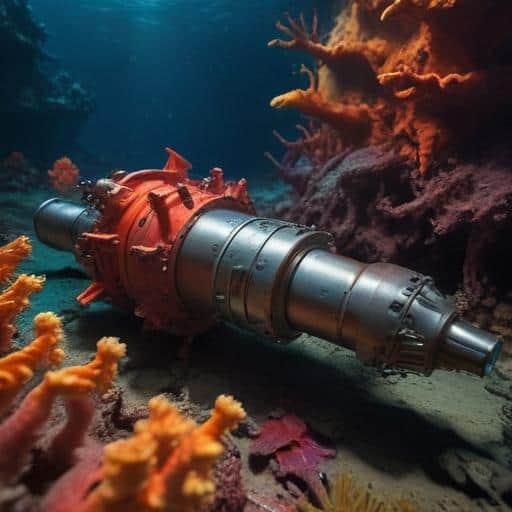
The Secretary-General of the International Seabed Authority (ISA), Leticia Carvalho, has emphasized the critical need for effective governance of deep-sea resources, urging member states to prioritize environmental protection over exploitation as the Council commenced its 30th session in Kingston. Carvalho’s remarks come at a pivotal moment, stressing the importance of establishing a strong, science-based regulatory framework for deep-sea mining, which is essential to safeguard fragile marine ecosystems.
“As we gather, let us remember that these negotiations are about legacy,” Carvalho stated, echoing concerns raised previously about the balance between resource extraction and environmental preservation. She called on delegates to ensure comprehensive operational guidelines are established before any significant mining activities begin.
Carvalho highlighted recent developments, such as the rise of deep-sea mining interests following the recent invocation of a clause by Nauru, which allows countries to start applying for mining contracts. This has intensified discussions on sustainable practices and called for urgent attention to regulatory measures. Some nations are actively pursuing mining, while others advocate for stricter regulations or outright moratoriums, reflecting a divide that Carvalho noted.
Acknowledging the commendable efforts of the ISA’s Legal & Technical Commission and Finance Committee, she praised their work on environmental thresholds and equitable profit-sharing frameworks. “The world is watching,” she observed, underscoring the global implications of the decisions made at the Council.
As Carvalho reiterated her commitment to reform, transparency, and effective governance, she also pointed to the upcoming commemoration of the ISA’s 30th anniversary, a significant milestone that she believes reinforces the organization’s responsibility to uphold environmental integrity for future generations.
The increasing scrutiny surrounding deep-sea mining is not limited to the ISA; it resonates with discussions among Pacific leaders and civil society advocating for caution and strong regulatory frameworks. Recent gatherings, such as the Deep Sea Minerals High-Level Talanoa in Fiji, have highlighted varying perspectives on deep-sea mining, emphasizing the vital role of traditional knowledge and community engagement in decision-making.
This evolving dialogue reflects a growing movement towards sustainable resource management in the Pacific region, presenting a hopeful possibility for balancing economic development with the protection of marine ecosystems. The choices made today regarding deep-sea mining will significantly impact both biodiversity and community welfare, suggesting that collective actions can lead to a more sustainable future.
Leave a comment