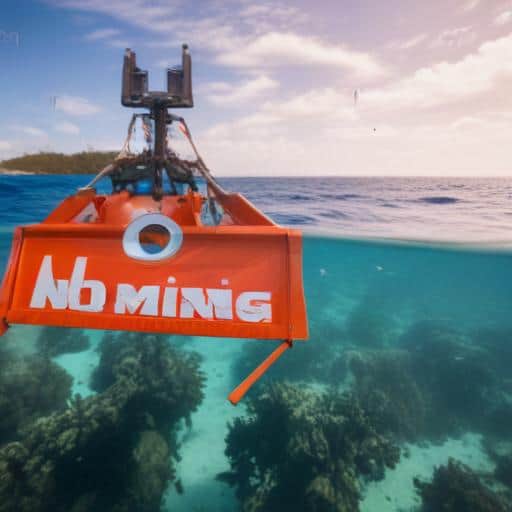
The Cook Islands’ foremost environmental group, the Te Ipukarea Society (TIS), is calling on the government to publicly oppose a controversial executive order signed by U.S. President Donald Trump that facilitates deep-sea mining. This move, described by TIS as “arrogant” and an infringement of international law, has sparked significant concern regarding environmental ramifications.
Last month, Trump enacted the “Unleashing America’s Offshore Critical Minerals and Resources” order, which instructs the National Oceanic and Atmospheric Administration (NOAA) to expedite the process for reviewing seabed mineral exploration licenses and permits for deep-sea mining in international waters. Specifically, the order aims to position the U.S. as a leader in seabed mineral development, viewing the ocean floor as a vital source of essential minerals like nickel and copper, crucial for the renewable energy sector.
Kelvin Passfield, TIS’s technical director, criticized the move, underscoring that the U.S. cannot selectively choose which elements of the United Nations Law of the Sea to follow. He expressed fears that if the U.S. is allowed to forge its own rules, it could set a dangerous precedent for other nations. TIS President June Hosking echoed these sentiments, pointing out that the distribution of seabed rights among various nations demonstrates a disregard for indigenous rights and raises questions about who should truly control these resources.
Adding complexity to the situation, a Canadian mining company, The Metals Company (TMC), has submitted an application for a permit to mine seabed areas internationally, although it has faced challenges in securing a commercial mining license via the International Seabed Authority (ISA). Critics like Passfield argue that TMC’s efforts to sidestep international regulations through U.S. legislation exemplifies corporate greed prioritized over environmental safeguards.
Recent discussions among Pacific leaders suggest a growing concern over the ecological implications of deep-sea mining. At an ISA assembly, South American delegations expressed a need for a moratorium, highlighting the necessity for mining initiatives to genuinely benefit humanity rather than corporate interests. Moreover, concerns have risen over potential ecological damage, with calls for robust scientific research to understand the long-term effects of mining on ocean ecosystems.
The evolving discourse surrounding deep-sea mining reveals a tension between economic opportunities and environmental sustainability. While parts of the Pacific, including the Cook Islands, entertain the financial prospects of mineral extraction, there is an increasing recognition of the imperative to protect marine environments. This suggests a potential pathway forward where community interests, ecological integrity, and the need for sustainable resource management align, fostering a future that cherishes both economic vitality and environmental stewardship.
With intense scrutiny from environmental advocates and local communities, there is hope that constructive dialogue can lead to rigorous protections for ocean resources, ensuring that the benefits of mineral extraction do not come at the cost of ecological health.
Leave a comment