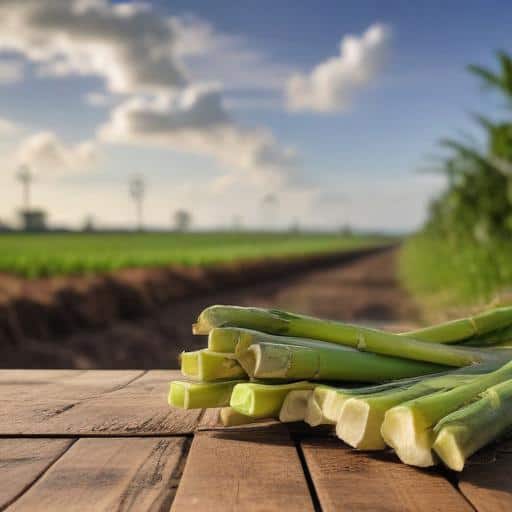
The announcement of a $12.22 per tonne third cane payment has elicited mixed reactions from sugar cane growers in Ba and Lautoka, as farmers gear up to receive a portion of the $133 million generated from the upcoming 2024 harvesting season. While some growers are hopeful about the assistance this payment could provide, others, like Ba cane producer Arun Sharma, express significant worries regarding its limited financial impact.
Sharma remarked that most of the payment would likely be consumed by existing debts, which include loans from the Sugar Cane Growers Fund and South Pacific Fertilisers, as well as expenses for hiring drivers and laborers. He illustrated the situation by stating that a farmer who produces 100 tonnes would only net $1,222 from this payment, which falls short of covering their operational costs.
Echoing these concerns, Atish Kumar, president of the Fiji Cane Lorries Association, pointed out that while authorities attribute low prices to decreased cane production, the increasing costs associated with farming continue to endanger growers’ financial welfare.
Contrarily, Vimal Dutt, CEO of the Sugar Cane Growers Council, recognized the frustrations voiced by farmers and offered context regarding the payment structure. He explained that the third cane payment is contingent on multiple factors, such as last year’s low cane yields and the volatility of global sugar prices. Dutt asserted that enhancing production is critical for improving farmers’ income in the future.
The third cane payment is slated for distribution this Friday and is essential in supporting farmers as they confront the challenges posed by climate change and economic pressures—a situation that necessitates ongoing governmental backing for the sugar industry.
Despite the challenges highlighted by growers, there remains a sense of cautious optimism for the future of Fiji’s sugar cane farmers. There is hope that increased emphasis on sustainable practices and enhancements in production, along with support mechanisms, could pave the way for improved livelihoods in this vital sector. This cautious optimism reflects the resilience of the agricultural community, which continues to adapt and seek solutions amidst evolving challenges.
Leave a comment