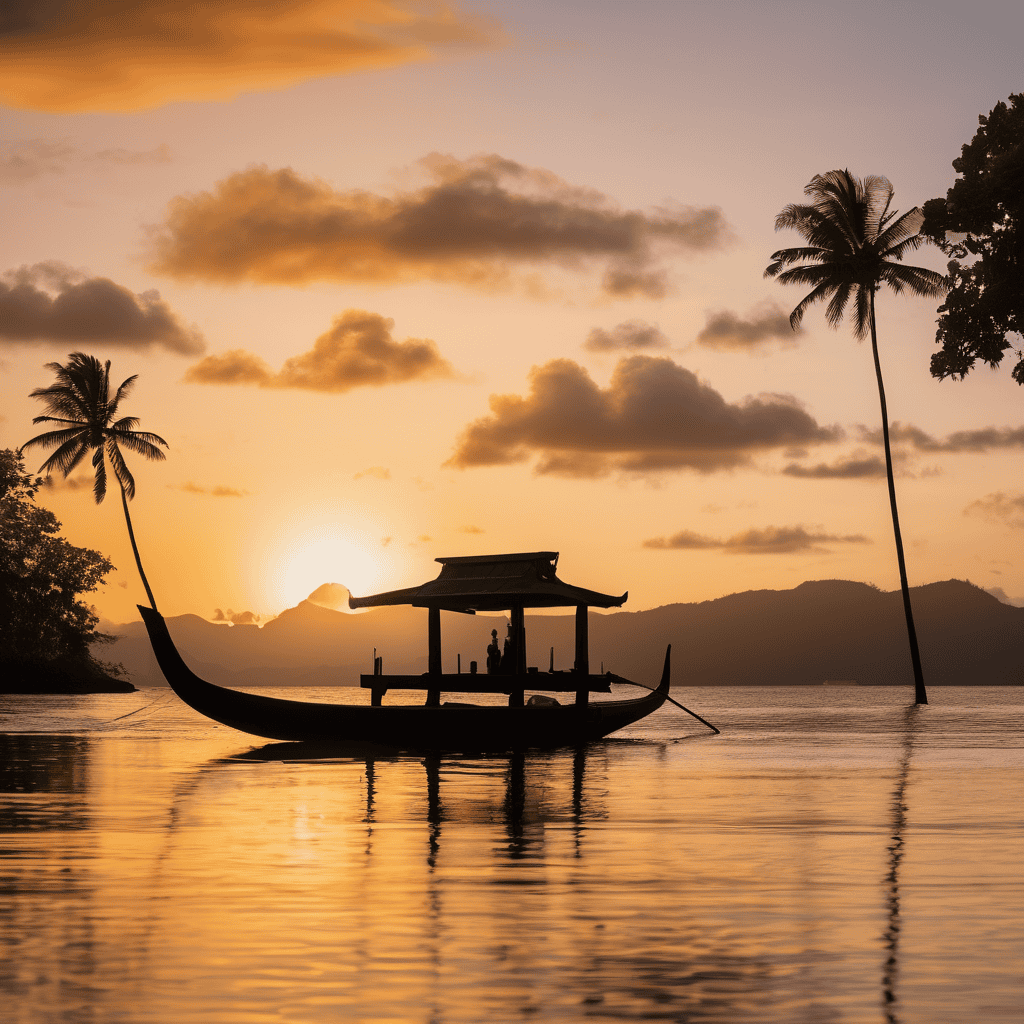
Stepping onto Bau Island is like entering a realm steeped in history, where the air is imbued with a sense of ancient authority. This sacred land is home to the villages of Bau, Lasakau, and Rara-o-Soso, each preserving a legacy that resonates through its people and architecture.
The island showcases a compelling reflection of two distinct periods. One can feel the lingering presence of Na Vatanitawake, a symbol of the darker ages, juxtaposed against the radiant white of the Ratu Cakobau Memorial Church, a beacon of hope and redemption. Turaga Tunitoga, Ratu Aisea Komaitai, emphasizes the cultural significance of the church, sharing that its story has been cherished and retold through generations.
In the 19th century, Bau was under the dominion of Na Vunivalu na Tui Kaba, Ratu Seru Cakobau, known for his ferocious reign characterized by power and fear. However, across the waters of Viwa Island, missionary John Hunt was dedicated to prayer and spiritual intercession for Ratu Cakobau, striving for his soul’s salvation. Despite passing away six years before Ratu Cakobau’s pivotal spiritual awakening on April 30, 1854, Hunt’s prayers proved to be instrumental.
On that day, Ratu Cakobau embraced Christianity, taking on the name Epenisa, or Ebenezer, representing a new beginning for the Fijian people. His heartfelt plea during this transformation was a call for strength and steadfastness. The impact of his conversion was profound, leading to the dismantling of 17 of his 18 spirit temples—the very structures that once symbolized pagan worship. The stones from these demolished temples were repurposed to construct the church that still stands today.
Crafted by stonemason John Sinclair with the assistance of prisoners of war, the church took 21 years to complete, featuring robust walls, elegant rosewood pillars, and intricate Gothic windows. Locals even contributed by harvesting and preparing sea coral for the church’s iconic whitewash, a testament to their devotion. Completed in 1880, the church was subsequently named the Ratu Cakobau Memorial Church in honor of its transformative leader.
Throughout the decades, the church has withstood the trials of time, undergoing renovations in 1954 and 1980, which allowed it to host significant events, including a visit from Queen Elizabeth II. These renovations were conducted with the support of the local Daku community, demonstrating their commitment to preserving this sacred site.
Perhaps the most poignant symbol of Ratu Cakobau’s transformation lies within the church—the Vatu ni Bokola, a stone once used for executing enemies outside the pagan temple. Cleansed and repurposed, this stone now holds holy water for baptisms, embodying the profound changes that have taken place.
Even after 146 years and the guidance of 49 ministers, the church continues to thrive as a center of worship. Attending a service on Bau Island today is a continuation of Ratu Cakobau’s original plea, a practice that deepens the connection between history and faith.
In conclusion, Bau Island and its revered church stand as enduring reminders of a tumultuous past intertwined with redemption. The stories etched in both stone and spirit reveal a narrative of sovereignty and faith that remains vibrant in the lives of its people today.
Leave a comment