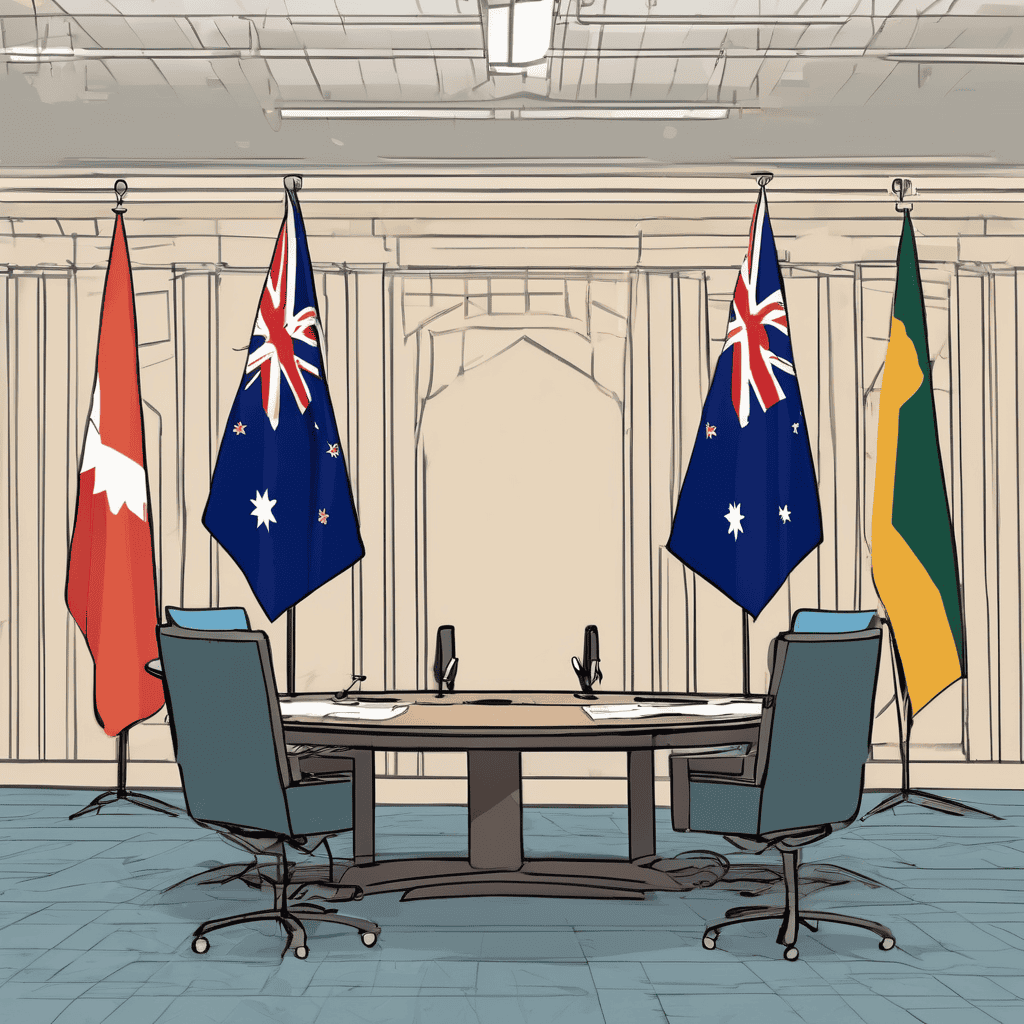
Australia’s diplomatic strategy is undergoing a significant transformation to address the increasing complexities and dangers in today’s global landscape. During the Sir John Quick Lecture in Bendigo, Jan Adams, Secretary of the Department of Foreign Affairs and Trade (DFAT), emphasized a renewed focus on the Indo-Pacific region, strong partnerships, and the defense of a rules-based international order.
Adams articulated that Australia’s international engagement is fundamentally tied to its core values, stating, “Our values shape our interests, and those interests shape our diplomacy.” She highlighted three guiding principles of Australian diplomacy: being principled—understanding national identity and values; being agile and clear-sighted—realizing how the world operates; and being proactive—capitalizing on opportunities regardless of the situation.
In light of a deteriorating strategic environment filled with conflict, coercion, and instability, Adams remarked, “As Foreign Minister Penny Wong says, our world is becoming less certain and less stable.” She pointed to various global challenges such as great power competition, cyber threats, misinformation, and violations of international norms, with reference to ongoing conflicts in regions like Ukraine, Sudan, and Myanmar.
Adams outlined Australia’s diplomatic framework, structured around four priorities: the Indo-Pacific region, key relationships, commitment to a rules-based order, and resilience. Emphasizing the importance of regional stability, she noted, “The Indo-Pacific region is where our prosperity and security are ultimately decided.” Australia has bolstered its regional influence through new treaties and enhanced partnerships with nations including Indonesia, Papua New Guinea, Nauru, and Tuvalu, while also negotiating with Fiji, Tonga, and Vanuatu.
The longstanding alliance with the United States remains central to Australia’s strategy. Adams described American leadership as “indispensable”, alluding to frameworks such as AUKUS and strengthened economic ties underscored by agreements on critical minerals signed between Australian Prime Minister Anthony Albanese and U.S. President Donald Trump.
On the complex relationship with China, Adams affirmed Australia’s aim for stability and constructive engagement, as China is not only a major partner in trade but also plays a critical role in regional dynamics. She reiterated that Australia’s interests are closely tied to supporting robust multilateral institutions. “A peaceful and prosperous global order can only be maintained through adherence to agreed rules and norms,” she stated, mentioning Australia’s commitment to reforming the multilateral system and its ambition to secure a seat on the UN Security Council for the term 2029-2030.
Adams also noted a shift within DFAT to address emerging priorities, including resilience in areas such as cybersecurity, economic stability, and countering foreign interference, which traditionally were not the department’s forte. Highlighting DFAT’s progress in diversifying its workforce, she stressed the importance of reflecting Australia’s multicultural identity.
The safety of Australians abroad remains a fundamental duty, as Adams pointed out the successful evacuation of thousands from crisis areas and the ongoing provision of trusted consular services. She concluded with a firm assertion that Australia will not merely adapt to the challenges of an unstable world but will actively engage in shaping it for the better. “We will be agile, principled, and proactive in meeting the moment,” she asserted, demonstrating Australia’s commitment to a proactive diplomatic approach moving forward.
Leave a comment