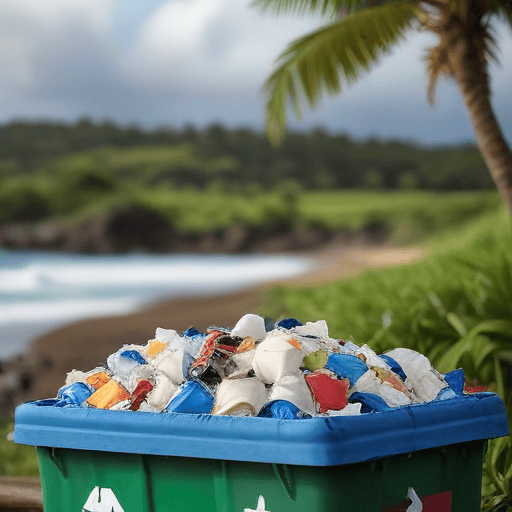
According to the International Union for Conservation of Nature’s (IUCN) 2021 Pacific Regional Report, many per-urban, regional, and rural communities, as well as outer islands, are significantly underserved when it comes to waste collection services. The report indicates that waste collection is mainly limited to capital cities and key urban areas within Pacific island nations.
The data revealed that in areas without waste collection services, unmanaged waste can account for between 27% and 60% of local waste disposal. This lack of adequate waste management in rural regions increases the risk of plastic waste leakage. Commercial enterprises and tourism sectors often bear the responsibility for arranging their own waste collection, as municipal authorities struggle with limited capacity to educate communities about waste management practices.
Where community education is somewhat successful, many rural areas lack proper disposal facilities, leading to unsafe waste disposal practices. In Fiji, for instance, the Naboro Sanitary Landfill is the only designated sanitary landfill that takes various types of waste, including residential and disaster waste, though there is a tipping fee for disposal. Furthermore, there are a few controlled and open disposal sites, while waste pickers operate in several locations.
Rural inhabitants frequently resort to backyard burial and open burning of waste, particularly when they cannot transport their garbage to authorized disposal sites.
Despite these challenges, there is hope for improving waste management in these underserved areas. Community education efforts, along with the development of more accessible waste disposal systems, could significantly mitigate the issues of unmanaged waste and plastic leakage in the region. By fostering a collective commitment to improving waste management practices and infrastructure, these communities can work toward a cleaner and more sustainable environment.
Leave a comment