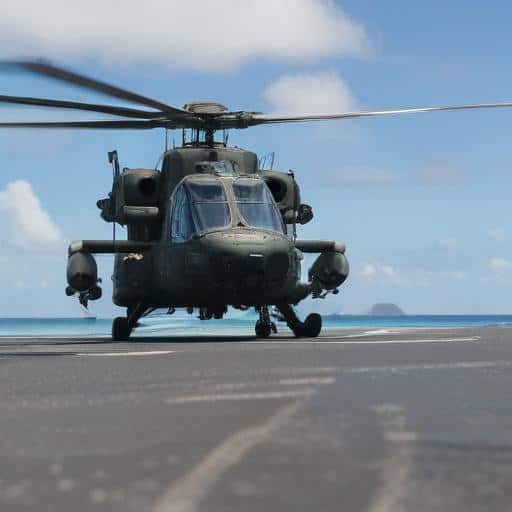
The U.S. Department of Defense has unveiled its plans for significant airport and seaport enhancements on Yap Island in the Federated States of Micronesia, designed to boost military readiness and facilitate the deployment of U.S. military forces in the region. The projects aim to improve entry points for U.S. military aircraft and vessels, including those from allied nations, without establishing permanent basing on the island.
These upgrades will enable the U.S. Air Force and Navy to conduct more frequent military exercises and training operations, highlighting the importance of maintaining robust defense capabilities in the Indo-Pacific. An estimated investment of $400 million is set for the airport enhancements alone.
Earlier this year, U.S. Secretary of Defense Pete Hegseth announced an ambitious $2 billion initiative aimed at bolstering military infrastructure across the FSM. This commitment is part of a broader strategy to counter China’s growing military influence in the region, reinforcing U.S. ties within the Pacific.
Recent bilateral discussions between U.S. officials and FSM leaders have reaffirmed the strategic partnership under the Compact of Free Association, which grants the U.S. exclusive rights for military operations in the FSM. The agreement provides substantial economic support to the FSM, with a funding commitment of $3.3 billion over the next two decades.
At the Yap airport, plans include an array of infrastructure improvements, such as runway extensions, facility construction to support diverse aircraft operations, and enhancements to ensure compliance with safety standards. Similarly, at Tamil Harbour, upgrades will facilitate dual-use operations, catering to both military and civilian needs.
A noteworthy aspect of this initiative is its commitment to enhance not only military readiness but also the civilian capacity of the airport and seaport, potentially improving regional aviation services and safety. This balanced approach aims to foster greater cooperation and support between the U.S. and FSM, reinforcing security and stability in the region amidst rising geopolitical tensions.
This initiative reflects an ongoing commitment to enhancing defense capabilities while fostering collaboration that promises to benefit both military and civilian sectors. The pursuit of infrastructure development here represents a hopeful investment in lasting partnerships and regional security amid a fluctuating international landscape.
Leave a comment