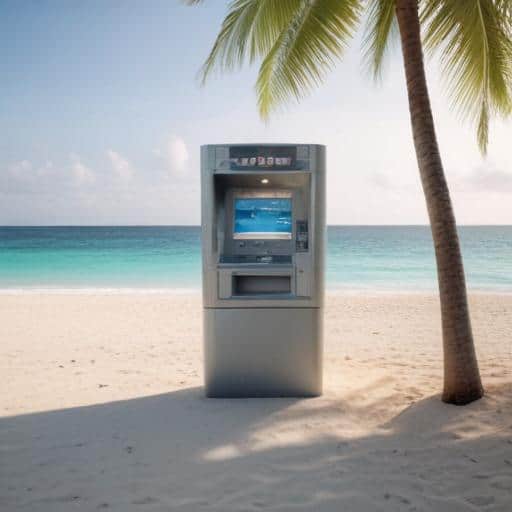
Tuvalu, one of the most isolated nations globally, has marked a significant milestone with the introduction of its first-ever ATMs at the National Bank’s headquarters in Vaiaku, Funafuti. The event, attended by Prime Minister Feleti Teo and notable local leaders, symbolizes the country’s leap into electronic banking, bringing modernization to its financial services for the first time in its history.
Until this recent development, the population of approximately 12,000 relied solely on cash transactions, often leading to long lines at the bank on payday, limited services, and restricted banking hours. With the installation of five ATMs and plans for 30 point-of-sale terminals, banking is poised to become significantly more accessible and efficient.
This initiative, initiated in 2021 at a cost exceeding AUD$3 million (about US$1.91 million), is seen as a transformative step towards financial modernization. Customers will initially need prepaid cards to access ATM services, with future plans to introduce debit cards and functionality for overseas transactions.
Teo expressed optimism about the project’s impact, stating, “We’re providing the service for free until people get the hang of it.” He emphasized the importance of accessibility while highlighting the government’s role in supporting this advancement.
The introduction of electronic banking is also expected to ease congestion at the bank, reduce cash dependency, and improve access to banking services for residents across the outer islands. As Tuvalu embarks on this new era of banking, it reflects a broader trend in the Pacific towards improving financial services and inclusivity—similar to advances seen in Fiji with mobile wallet integration and digital transactions.
This momentous occasion not only fosters financial accessibility but also represents a hopeful shift towards greater economic participation for Tuvalu’s residents, suggesting a promising outlook for the nation’s future developments.
Leave a comment