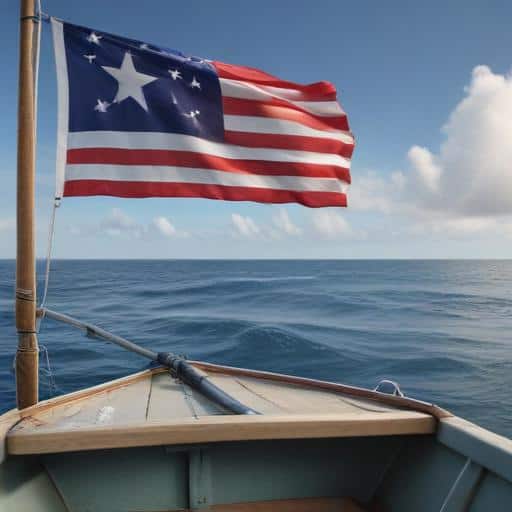
U.S. President Donald Trump’s recent proclamation regarding commercial fishing rights is expected to significantly impact American Samoa’s fishing industry, particularly its tuna fleet operating out of Pago Pago harbor. According to Rep. Uifa’atali Amata Radewagen, this bold move aims to enhance economic activities in the region and strengthen food security in the United States while combating the challenges posed by illegal fishing from foreign vessels.
Radewagen emphasized that the restoration of fishing waters not only fosters a sustainable economy for American Samoa but also enhances the country’s commercial fishing presence in the vast Pacific region. The fishing industry is critical to the territory’s economy, which was adversely affected by previous fishing bans imposed around marine monuments.
While this move is celebrated by local officials, it has drawn sharp criticism from conservationists and environmental advocates. David Henkin from Earthjustice voiced concerns that the proclamation undermines decades of conservation efforts aimed at protecting fragile marine ecosystems and endangered species. Marine biologist Bob Richmond condemned the decision as detrimental, warning that it could threaten the future viability of fisheries by destabilizing delicate ecological balances.
This proclamation builds on Trump’s executive order from May 2020, known as “Promoting American Seafood Competitiveness and Economic Growth,” which sought to reduce regulatory barriers hampering fishermen. After signing the latest executive action, Trump highlighted it as a means to enhance domestic seafood production and revoke restrictive policies that have burdened American fishermen in recent years.
The directive will allow commercial fishing activities in the Pacific Islands Heritage Marine National Monument, specifically in waters ranging from 50 to 200 nautical miles offshore of certain islands, without impacting the critical habitats that lie within 0 to 50 nautical miles of these islands where fishing will remain prohibited.
The White House argues that robust federal protections for vulnerable species and habitats continue to be enforced, aiming to address the decline in U.S. fisheries and counter the increasing seafood trade deficit, which currently exceeds $20 billion. Trump highlighted that most American seafood is now imported, calling for an end to practices that disadvantage American fishing fleets.
As local fishermen potentially regain access to these waters, they hope it will revitalize the economy of American Samoa, where over 80% of the economy relies on fishing. The future of both the fishing industry and marine conservation remains to be seen, with growing discussions pointing towards a need for a balanced approach that prioritizes ecological integrity alongside economic success.
Overall, this development reflects the complexities of environmental conservation amidst economic pressures, hinting at the possibility for collaborative efforts to strike a balance between resource use and sustainability in the Pacific.
This conversation reminds us that the path forward lies in finding viable solutions that nurture both economic resilience for communities and the preservation of precious marine ecosystems for generations to come.
Leave a comment