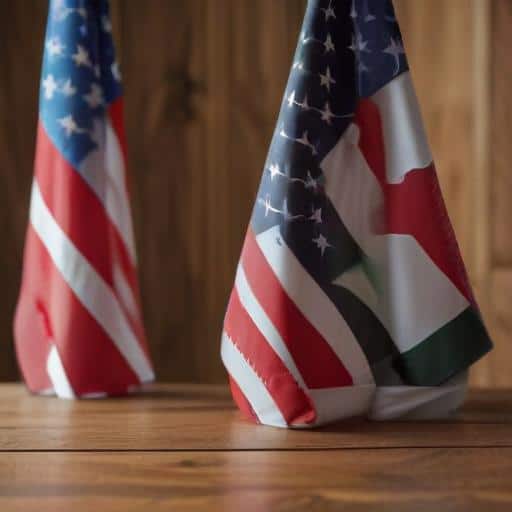
U.S. President Donald Trump recently held a meeting with Syria’s interim President Ahmed al-Sharaa in Saudi Arabia, signaling a possible thaw in relations between the U.S. and Syria. During their discussions, Trump advocated for Syria to mend ties with Israel, following a surprising U.S. decision to lift sanctions on the Syrian government. This move aims to assist Syria’s recovery and rebuilding efforts after years of civil war.
At the meeting, Trump expressed optimism about Sharaa’s potential to stabilize the country, noting, “He’s got a real shot at holding it together.” After the meeting, there were reports indicating Sharaa’s willingness to consider joining the Abraham Accords, which facilitated normalization between Israel and several Arab nations.
The discussions reflect a broader geopolitical strategy by the U.S. to strengthen ties within the oil-rich Gulf region, highlighted by Trump’s subsequent visit to Qatar, where he oversaw a significant deal for jets from Boeing valued at $1.2 trillion. This arrangement is among various investments aimed at solidifying relationships in the area amidst ongoing tensions, including concerns regarding Iran’s influence.
The lifting of sanctions could potentially usher in humanitarian aid to Syria, combating the decade-long deprivation caused by war. This shift in policy also aligns with a cautiously optimistic sentiment from various U.S. political leaders, suggesting that it could lead towards a more stable Syria and also address mutual interests in the region, particularly regarding the influence of Iran and Russia.
However, the implications of these developments are complex. Israeli officials have expressed concern over Sharaa’s administration, given its ties to jihadist origins, though there has been a noted severance of direct associations with organizations like al-Qaeda. Israel’s ongoing military actions in Syria, fearing the ramifications of a strengthened Syrian government, continue to provoke caution in their diplomatic calculus.
Critics may raise ethical concerns about potential conflicts of interest stemming from Trump’s business dealings in the region and the acceptance of significant gifts from foreign nations, such as a proposed Boeing 747 from Qatar as a new Air Force One. These intricacies will be important to navigate as the US and Syria explore this new chapter in diplomatic relations.
Overall, this meeting could represent a strategic pivot in Middle Eastern diplomacy, offering a hopeful avenue for rebuilding ties not only between Syria and the U.S. but also encouraging broader regional stability with Israel at its center.
Leave a comment