
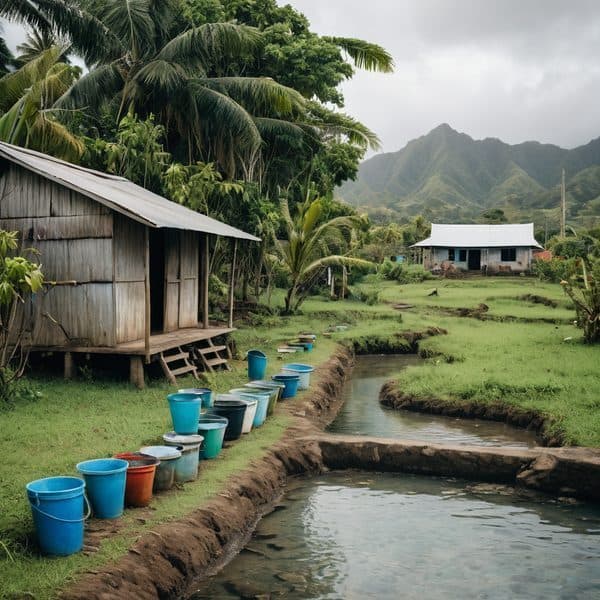
A Vuniwere woman in Seaqaqa, Macuata, says caring for her amputee husband has become unbearably harder as their settlement endures an eight-month stretch without running water — a crisis that prompted Rural and Maritime Development Minister Mosese Bulitavu to tell this newspaper he had been unaware of the situation and will dispatch a team to investigate.
Kelera Vakadagi said the prolonged outage has compounded everyday tasks at home. “My husband’s foot is amputated, and on top of that I have to worry about water. Water to cook and feed my family,” she said. Vakadagi described repeatedly carrying buckets from distant sources to meet basic needs, saying the physical strain has taken a toll while she also performs full-time caregiving duties. “Many times I have to take buckets to fetch water for my family. This is to meet our daily needs,” she said.
Residents of Vuniwere told the newspaper they have had no tap water for eight months. With no reliable supply, families rely on rainfall when it comes and on trips to remote wells or streams to collect water for cooking, cleaning and hygiene — an arrangement they say is unpredictable and unsustainable. “There’s been no water for eight months. It’s not easy, the problem we are going through,” Vakadagi said.
The lack of running water is disrupting daily routines and amplifying vulnerability for households with elderly or disabled members. Rain provides only temporary relief: when it falls, families rush to fill buckets and storage tanks, but long dry spells leave them without even those short windows of respite. Residents say the burden of fetching and rationing water falls disproportionately on women and caregivers in the settlement.
Minister Bulitavu, contacted about the reports, said he had not been aware of the Seaqaqa outage until this newspaper raised the issue. He pledged to send a team from the Rural and Maritime Development Ministry to Seaqaqa to “look at ways in addressing the issue,” though he did not give a timeline for the visit or outline specific remedial measures.
The Seaqaqa shortage comes against a backdrop of other prolonged water problems in Fiji’s Northern Division. In January, tenants of a six-flat commercial lot in Labasa reported enduring a ten-month lack of running water, highlighting a pattern of extended supply disruptions in the region. Communities across Vanua Levu have also faced weather-related disruptions since late 2025, when heavy rains and flooding affected access and infrastructure in parts of the north.
Residents of Vuniwere say they now await the minister’s promised team and hope any assessment will lead to prompt repairs or alternative arrangements, particularly for vulnerable households like Vakadagi’s where the physical demands of caregiving and water collection are intertwined.