
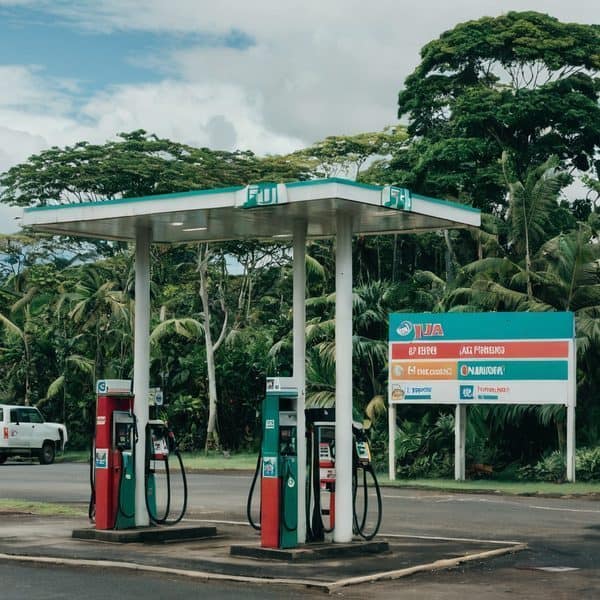
SUVA — Prime Minister Sitiveni Rabuka on Friday unveiled a FJ$56 million (US$39.95 million) government response to cushion families, businesses and essential services from what he described as a global fuel price crisis, while stressing Fiji’s physical fuel supplies remain intact.
Rabuka said the announcement followed a Cabinet decision on April 21 to redeploy funds from the existing 2025–2026 budget — not by taking on new debt — to provide immediate relief. “This is not new borrowing. This is responsible Government, reprioritising funds from delayed projects to provide immediate support where it is needed most,” he said.
Giving a detailed update on stock levels, Rabuka said that as of April 19 Fiji had about 45 million litres of fuel on land and an additional 22 million litres due to arrive before the end of April, bringing total available supply for the month to about 67 million litres. Daily domestic consumption runs at roughly 2.5 million litres. He warned that stocks will fall to about 40 million litres — roughly 29 percent of storage capacity — by the end of April but characterised that drawdown as a routine part of the supply cycle needed to receive and discharge the next shipments safely.
Looking ahead, the Prime Minister said fuel suppliers have committed to deliver approximately 118 million litres in May, which he said would lift national stocks to over 59 percent of storage capacity and restore a comfortable buffer. “Once those shipments arrive, our national fuel stock is expected to rebound to over 59 percent of storage capacity. This means Fiji remains in a stable supply position. There is no shortage,” Rabuka said, adding the country is operating in “Phase 1 — a normal supply situation, but under pressure from high global fuel prices.”
Rabuka made clear the core problem is price, not availability. He attributed recent increases to global market disruption stemming from the war in the Middle East and related shipping and insurance pressures, including disruptions to traffic through the Strait of Hormuz. “Fuel is purchased in US dollars, and when global prices increase, those increases are passed through to our domestic market. This is why prices went up on the 1st of April. That decision was not made by Government but by the independent price regulator, FCCC, to reflect real purchasing costs,” he said. He also warned consumers to expect another price rise in May.
The move to redeploy FJ$56m follows earlier government assurances in March that Fiji’s fuel supply was being closely monitored amid international tensions that risked pushing global crude and refined product prices higher. The latest update provides more granular stock figures and a supplier commitment for May volumes, information intended to reassure businesses and transport operators concerned about persistent price pressure and potential shortages.
Rabuka said the emergency funding will prioritise protecting livelihoods and maintaining essential services but did not provide a breakdown of measures or beneficiaries in his April 24 statement. The Cabinet’s emphasis that the funds are being reprioritised from delayed projects is intended to blunt criticism that the response would increase public debt.