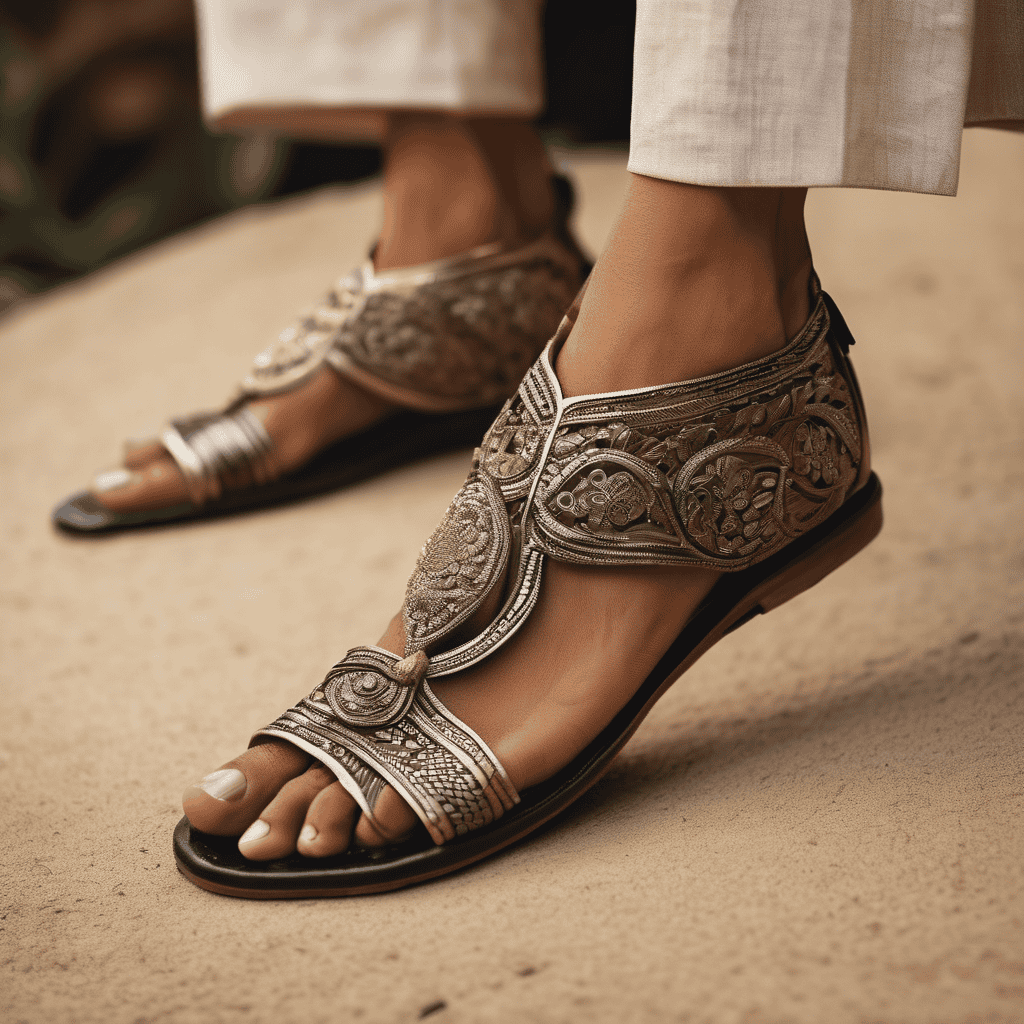
Prada is set to launch a limited-edition collection of sandals in India, drawing inspiration from the country’s traditional footwear, with each pair priced at approximately 800 euros ($930). Senior executive Lorenzo Bertelli announced that this initiative is part of a strategy to transform previous criticism over cultural appropriation into a collaborative effort with Indian artisans.
The Italian luxury brand plans to produce 2,000 pairs of these sandals in the Indian states of Maharashtra and Karnataka, partnering with two state-supported organizations. This collaboration aims to merge Indian craftsmanship with Italian technological expertise to create a unique product.
Bertelli highlighted the importance of blending local manufacturing capabilities with Prada’s own techniques, stating, “We’ll mix the original manufacturer’s standard capabilities with our manufacturing techniques.” This collection is scheduled to be available for purchase in February 2026 at 40 Prada stores around the world and online.
The move comes after Prada faced backlash for showcasing sandals that resembled 12th-century Indian Kolhapuri chappals at a Milan show six months ago, prompting outrage from artisans and Indian politicians. In response to this criticism, Prada acknowledged the cultural roots of its designs and initiated discussions with artisan organizations for a partnership.
Prada has formalized an agreement with Sant Rohidas Leather Industries and Charmakar Development Corporation, alongside the Dr. Babu Jagjivan Ram Leather Industries Development Corporation, both of which are committed to promoting India’s leather heritage. Bertelli expressed enthusiasm for being a “multiplier of awareness” for traditional chappals, indicating that the three-year partnership will include training programs aimed at empowering local artisans while providing opportunities for them to learn at Prada’s Academy in Italy.
With chappals traditionally crafted in Maharashtra and Karnataka by marginalized communities, this collaboration is viewed as a potential game-changer. Artisans are optimistic that partnering with a luxury brand like Prada will elevate the status of their craft, creating a ripple effect that increases awareness and demand. “Once Prada endorses this craft as a luxury product, definitely the domino effect will work,” said Prerna Deshbhratar, managing director of LIDCOM.
Bertelli noted that the training and project investment would reach “several million euros,” emphasizing that artisans involved would receive fair compensation.
While Prada opened its first beauty store in Delhi this year, Bertelli indicated that the company has no immediate plans to expand its retail clothing presence in India, suggesting that any new store openings could be three to five years away. He acknowledged India’s luxury goods market, valued at around $7 billion in 2024 and projected to reach about $30 billion by 2030, as a sector of “real potential,” despite being significantly overshadowed by China’s larger market.
In a landscape where many global brands enter India through partnerships with large conglomerates, Bertelli revealed that Prada prefers a more independent entry approach, even if it takes more time. As the collaboration with Indian artisans unfolds, it presents a promising opportunity to preserve traditional craftsmanship while also enhancing the luxury market in India.
Leave a comment