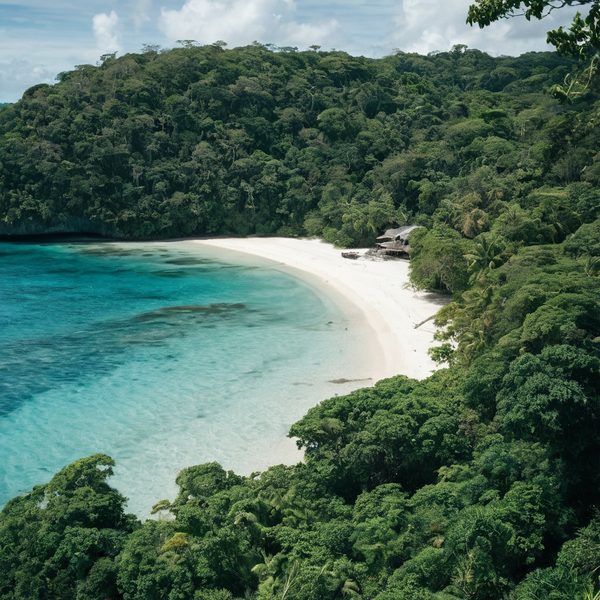
A new Guam-based report warns that a rapid US military buildup in Palau is outpacing safeguards meant to protect the island nation’s environment and sovereignty, a finding that has surfaced as Palauan President Surangel Whipps Jr. made a historic first state visit to New Zealand this week. The Pacific Centre for Island Security’s Micronesia Security Outlook 2025 says Palauan communities have been sidelined as installations and activities accelerate under the renegotiated Compact of Free Association.
The Palau chapter of the report was authored by Jodean Remengesau, director of the Bureau of Agriculture in Palau’s Ministry of Agriculture, Fisheries and the Environment. Remengesau writes that, while the compact grants the United States rights to use Palauan land, waters and airspace and to install military infrastructure, it also obliges the US to meet Palauan environmental standards. “The U.S military had missed and fell short of fulfilling its duties and responsibilities under the compact,” he states in the report.
The paper highlights specific environmental and procedural concerns in Angaur, one of Palau’s 16 states. According to the report, the US military cleared land there to site the first site of a tactical mobile over-the-horizon radar system without obtaining required environmental earthmoving permits or holding community consultations mandated by Palauan law. It says shredded tree debris left at the site created conditions inviting infestation by the invasive coconut rhinoceros beetle, and that some of that debris was later dumped on residents’ yards as authorities rushed to address the problem.
Those actions were already the subject of legal action: in 2023 Angaur Governor Steven Salii sued Palau’s central government, the Palau Environmental Quality Protection Board, the US government and its military contractors. The suit alleged the clearance of 271,807 square metres of land in Angaur without an environmental impact assessment or necessary permits, and argued this violated Palauan environmental laws and compact agreements.
The report acknowledges why the US presence has expanded. Under the renegotiated compact, which took effect with a new funding cycle beginning 1 October 2023, the United States pledged an US$890 million assistance package over 20 years and reaffirmed its defence responsibilities for Palau. The publication also notes broader geopolitical competition, particularly between Washington and Beijing, as a driver of intensified activity across Micronesia.
One concrete project cited is a US$118 million radar programme the report says is expected to be operational this year. The paper also contends that a shoreline radar tower system initially presented to Palauans as a single, jointly used infrastructure later amounted to two separate installations—an arrangement the report frames as emblematic of diminished transparency around military projects.
The timing of the report — coinciding with Whipps’ state visit to New Zealand — may amplify questions about Palau’s diplomatic balancing act: the island nation relies heavily on compact funds and foreign aid, yet many residents and local officials are increasingly voicing concerns about environmental protections, consultation and how sovereignty is practised amid strategic competition. The report calls for stronger enforcement of environmental stipulations in the compact and greater local involvement as military construction proceeds.
Leave a comment