A new report says mounting dissatisfaction in Palau over an accelerated United States military buildup has left legal and environmental protections ineffective and Palauans sidelined, even as Palau’s president undertakes a historic State visit to New Zealand this week.
The Guam-based Pacific Centre for Island Security’s Micronesia Security Outlook 2025 highlights concerns that the “guardrails” written into arrangements between the United States and Palau are being undermined by rapid militarisation. Jodean Remengesau, who authored the Palau section of the report and is director of the Bureau of Agriculture in Palau’s Ministry of Agriculture, Fisheries and the Environment, wrote that “the U.S military had missed and fell short of fulfilling its duties and responsibilities under the compact of the U.S with Palau.” The Compact of Free Association gives the U.S. broad rights to use Palauan land, water and airspace but also requires adherence to environmental standards and local processes.
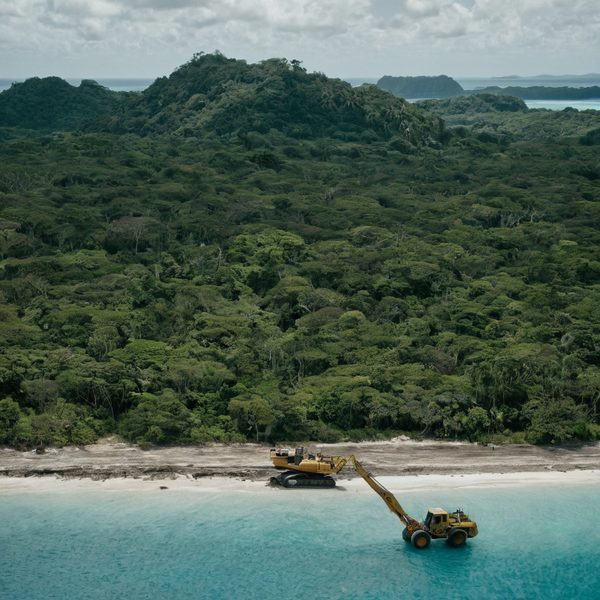
The report details a high-profile example on the island of Angaur, where Remengesau says the U.S. military cleared land for a tactical mobile over‑the‑horizon radar system without obtaining Palauan earthmoving permits or carrying out required community consultations. The clearing produced “piles of shredded tree debris” that the report says created conditions for invasive coconut rhinoceros beetle infestation; those debris piles were later, according to the report, dumped on residents’ yards in a rushed attempt to manage the problem.
Angaur’s governor, Steven Salii, has already taken legal action over the incident. In 2023 Salii sued Palau’s national government, the Palau Environmental Quality Protection Board, the U.S. government and U.S. military contractors, alleging violations of Palauan environmental laws and compact obligations after 271,807 square metres of land were disturbed without an environmental impact assessment or permits. The lawsuit underscores simmering local resistance to how infrastructure projects tied to U.S. security objectives have been implemented.
The report also places the buildup in a wider geopolitical context. It points to heightened U.S.-China tensions as a driver of recent military activity in Palau. Under the renegotiated Compact, the United States began a US$890‑million assistance package to Palau on 1 October 2023, spread over 20 years, and has explicit defence responsibilities for the island state. The U.S. military’s US$118 million radar project in Palau is projected to be operational in 2026, a development the report says will likely increase the military footprint and, with it, scrutiny over transparency and adherence to environmental and sovereignty protections.
Those dynamics are unfolding as Palau’s president, Whipps, makes a first-ever State visit to New Zealand — a diplomatic milestone for the tiny Pacific republic. The visit comes at a moment when Palauan leaders face the dual pressures of securing international partnerships and responding to domestic unease about how strategic infrastructure is planned and sited.
Pacific Centre for Island Security authors warn the combination of large inflows of compact funding, strategic importance to external powers, and rapid project timelines risks compromising both the environmental standards embedded in Palauan law and the sovereignty of local decision-making. The report’s findings add weight to calls from local officials and legal actors for greater transparency, stricter compliance with environmental processes, and fuller community consultation as the region adjusts to changing strategic imperatives.
Leave a comment