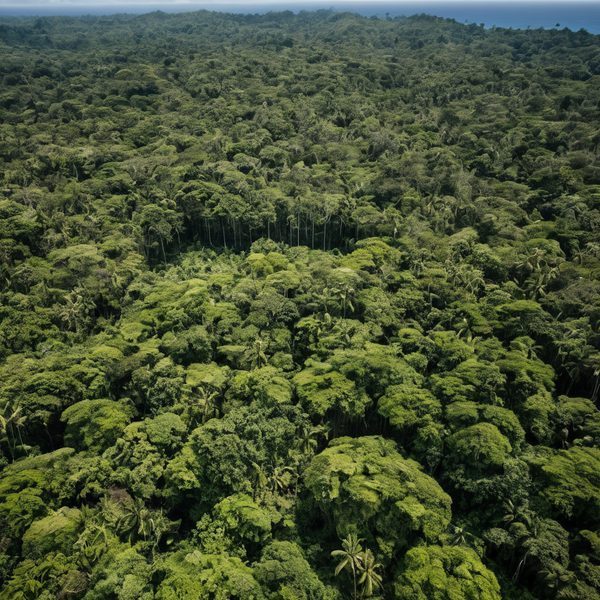
A new security assessment warns that accelerated U.S. militarisation in Palau has sidelined environmental protections and left communities excluded from decisions affecting their land, with recent land clearance on Angaur island at the centre of mounting local and legal opposition.
The Guam-based Pacific Centre for Island Security’s Micronesia Security Outlook 2025 contains a Palau chapter authored by Jodean Remengesau, director of the Bureau of Agriculture in Palau’s Ministry of Agriculture, Fisheries and the Environment. Remengesau argues that while the Compact of Free Association grants the U.S. military exclusive use of Palauan land, waters and airspace, it also obliges the United States to meet Palau’s environmental standards — obligations he says have not been met. “The U.S. military had missed and fell short of fulfilling its duties and responsibilities under the compact,” he writes.
The report singles out the U.S. tactical mobile over-the-horizon radar project on Angaur, where, Remengesau says, land was cleared without an environmental earthmoving permit and without the community consultations required by Palauan law. The clearance produced “piles of shredded tree debris” that were later dumped on residents’ yards, the report says, creating conditions that could invite infestation by the invasive coconut rhinoceros beetle. Those environmental breaches prompted legal action: in 2023 Angaur Governor Steven Salii filed suit against Palau’s central government, the Palau Environmental Quality Protection Board, the U.S. government and military contractors, alleging that 271,807 square metres of land were disturbed without an environmental impact assessment or required permits.
The controversy comes as Palau implements a renegotiated Compact with the United States that includes an US$890-million assistance package spread over 20 years, a cycle that began on October 1, 2023, and an explicit U.S. defence commitment. The Micronesia Security Outlook notes that because a large portion of Palau’s national budget derives from compact funds and foreign aid, the U.S. military is likely to make growing use of Palau’s territory — a dynamic the report says has increasingly compromised “the island nation’s peace and sovereignty as its people once knew it.”
The security review also highlights the scale and timeline of U.S. infrastructure on Palau. The radar project has an estimated budget of US$118 million and is expected to be operational in 2026. The report says what was initially presented as a single shoreline radar tower for mutual use later materialised as two separate installations, a development that has heightened local concerns about transparency and the ultimate control and purpose of the facilities.
The broader context for the buildup is the intensifying geopolitical competition between the United States and China in the Pacific, which the report identifies as a driving factor behind recent U.S. activity in Palau. For Palauans, however, the immediate fallout has been environmental damage, a sense of exclusion from decisions on their land, and legal challenges seeking to hold both national and international actors accountable to Palauan law.
The new report represents the latest development in an unfolding dispute with immediate implications: the radar timeline means significant infrastructure work is already under way and may soon be operational, while ongoing litigation and growing public dissatisfaction could influence how future projects are planned and implemented. The Micronesia Security Outlook’s findings are likely to sharpen scrutiny from regional partners and conservation advocates over whether compact-era guardrails are being observed as Palau navigates its security relationship with the United States.
Leave a comment