A new family biography by James Norman Stevenson lifts the veil on a formative decade in the life of one of Fiji’s earliest photographers, Leslie Norman Anderson — better known in historical records and family circles as LNA. The View from Delanasau: The Life and Times of Leslie Norman Anderson (LNA) traces the young Australian’s arrival in Fiji to a narrow window in April–May 1901 and follows his integration into the social and commercial rhythms of Levuka, where Stevenson shows LNA settled for the next ten years.
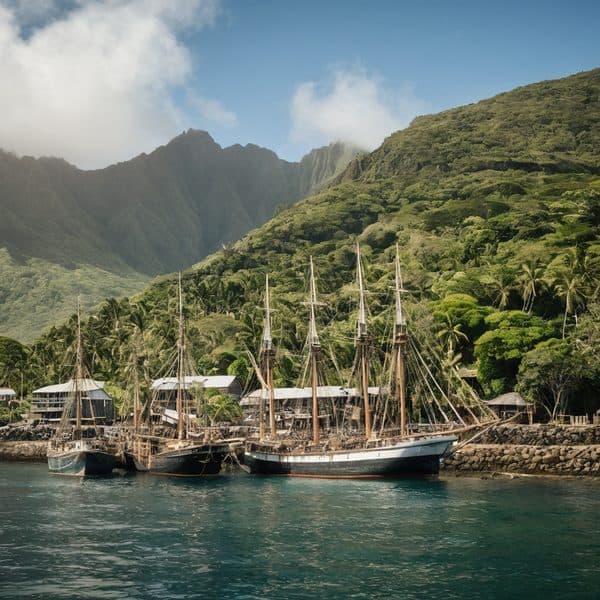
Stevenson reconstructs LNA’s voyage as a two-stage passage: a steamer from Sydney to Suva, where the budding photographer had a brief glimpse of the colonial capital, then onward on an inter-island trader to Ovalau. The account places LNA on the decks as the vessel approached Levuka — a harbour alive with schooners, cutters and the stately Norwegian three-masted ship The Queen — and paints the town as a cinematic threshold between past and future. Levuka, whose name literally means “in the middle of things,” is presented as the setting where LNA’s life shifted from a risky departure to a rooted existence.
Concrete details in Stevenson’s book add texture to that transition. On arrival LNA found work with Hedemann & Evers, one of the trading houses on Beach Street, the narrow waterfront spine where shipping houses, timber merchants and banks still concentrated Levuka’s commercial life. Stevenson’s research shows the job demanded initiative and responsibility and provided LNA with a foothold in the island port’s mercantile community. The book also records that he lived on Ovalau from 1901 until 1911 — a decade that would prove pivotal for his personal and professional development.
Beyond employment, Stevenson highlights LNA’s social integration into Levuka’s civic life. Reconnecting with the Anglican Church, LNA not only attended services but played the organ — a detail Stevenson suggests is telling of how the young immigrant positioned himself within the town’s social networks. It was within that same communal fabric that LNA met Hilda Ethel Wilson, an encounter Stevenson frames not as a single dramatic pivot but as a quiet beginning that would shape his subsequent life in Fiji.
The book’s depiction of Levuka is both atmospheric and contextual: Stevenson's pages describe hill-scalloped homes behind the commercial strip, churches anchoring neighbourhoods and the Deed of Cession monument as a continuing reminder of the colonial framework that shaped everyday life. Although Suva had become Fiji’s administrative capital decades earlier, Stevenson argues Levuka retained an outsized cultural and social significance during LNA’s decade there, a factor that helped the young photographer find his place.
This volume follows earlier family-led storytelling about LNA’s Australian roots and offers fresh archival detail about his early years in Fiji. By focusing on the April–May 1901 arrival, the Hedemann & Evers connection, his role in the Anglican congregation, and the meeting with Hilda Ethel Wilson, Stevenson reframes the narrative from one of migration to one of becoming — documenting how a 21-year-old’s gamble on a new life in the islands became, over ten years, a settled chapter of family and community history.
Leave a comment