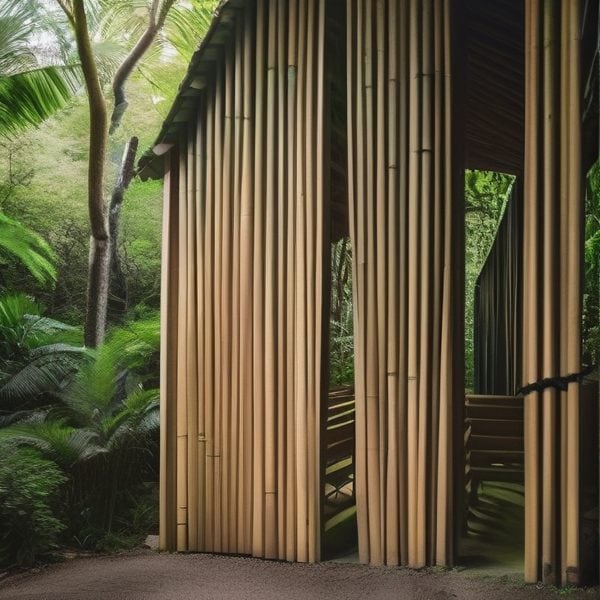
A quiet turn off the Nausori–Wainibokasi Highway onto Vuci Road leads into thick bamboo groves and a forested hill where Naag Baba Kuti, one of Fiji’s most secluded Hindu sacred sites, sits wrapped in near-silent reverence. New on-site reporting paints a fuller picture of the complex — its history, rituals and the people who tend it — revealing a place that blends Girmitiya-era memory with living devotional practice.
The site, a few kilometres from the main highway, is believed to have been established during the time of the Girmitiyas, indentured labourers who came from the Indian subcontinent. Spread across the hillside, the complex comprises a series of shrines to multiple Hindu deities — from the elephant-headed Ganesh to avatars of Vishnu — and has become a destination for devotees seeking blessings, healing and fulfilment. The grounds are rooted in both natural quiet and ritual: the rustle of bamboo, small forest streams and birdsong frame the meditative spaces.
At the entrance a stark white structure is thought to house the tombs of the site’s original founders — three men who arrived in Fiji during the indenture period. Some accounts link them to survivors of the ship Syria, which wrecked off Nasilai in 1884; those who lived are said to have carried sacred figurines across the kala pani, the “black waters,” and established a place of worship on this hill. “In those days the altars were built from mud,” said Richard, son of the site’s caretaker Lata, who has looked after the sacred grounds for 18 years. He described the founders as instrumental in developing the place into a space for worship and meditation.
Distinctive ritual features include a Wish Tree, its trunk and branches festooned with bright cotton strands — typically red, yellow or orange. Devotees circle the tree an odd number of times (three, five or seven) while making a wish; the tied threads symbolize protection and faith. “People come here from all over Fiji and even overseas,” said Doreen Singh, a descendant of a family that helped develop the site in later years. “They come seeking healing, peace and happiness. And everything here is free. It is not exactly a mandir — it is simply a place to pray, meditate and be close to god.”
Visitors are asked to observe a strict code of conduct intended to preserve the sanctity of the site: approach with a “clean heart, a pure state of mind,” Richard said, and do not take meat before coming. Certain items that might stain cloth coverings over idols or create fire hazards are not permitted inside shrine areas. The blend of informal hospitality and firm rules underscores the site’s dual nature as both community shrine and sacred precinct.
Further down a flight of stone steps sits a small pool where the Naag, the serpent deity, is worshipped. Unlike the colourful idols elsewhere, the snake idol is a weathered stone figure set beside flowing water; nearby stands a black Shiva Lingam representing the infinite, formless aspect of Lord Shiva. For many visitors, the hill’s quiet, natural setting — rather than ornate architecture — is what makes Naag Baba Kuti a place of comfort and solace, a repository of Girmitiya memory and ongoing devotion preserved by caretakers such as Lata and her son.
Leave a comment