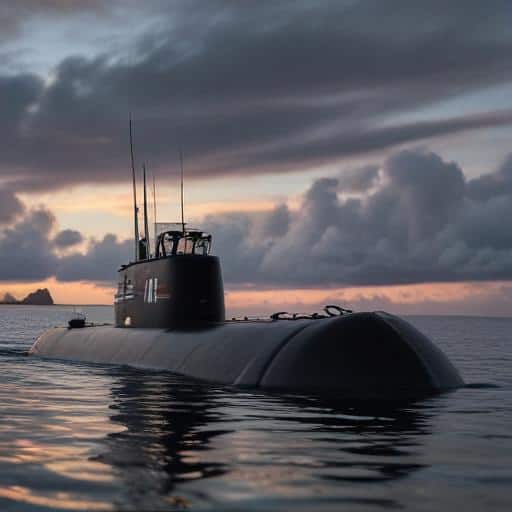
A local fisherman off Isabel Province in the Solomon Islands recently found an abandoned semi‑submersible vessel that authorities now suspect is a narco submarine — a low‑profile drug‑trafficking craft built to run just below the waterline. The 40‑foot fibreglass hull, sealed hatch and multiple powerful outboard engines are consistent with self‑propelled semi‑submersibles (SPSS) used by international cartels to move large drug consignments with reduced risk of detection.
Member of Parliament Ben Maenu’u, who came across the craft while fishing, described the vessel as having a closed structure and engines in good condition. Local reports note the boat was fitted with two outboard motors of about 85 horsepower each and showed signs it had not been adrift long. No drugs were found onboard, but Australian authorities called the discovery “the first concrete evidence” of narco sub operations in the Pacific — a development that has alarmed regional law enforcement.
Why this matters
Semi‑submersibles are not true submarines but cruise very low in the water, making them hard to spot by radar, satellites or from the air. Many are produced in clandestine shipyards in South America, built for long ocean crossings and sometimes intended for single use: after delivering cargo they may be scuttled to destroy evidence. High‑capacity interdictions have occurred before — in 2019 the US Coast Guard intercepted a narco sub off Mexico carrying more than 7.7 tonnes of cocaine, worth hundreds of millions of dollars — demonstrating the scale these vessels can serve.
Regional context and risk
The find sits alongside a wider pattern of evolving smuggling methods into Pacific states. United Nations reporting and recent law enforcement operations show traffickers hiding methamphetamine and cocaine in everyday goods and using sea drop‑offs and rafts equipped with locating devices. Fiji and Papua New Guinea have been highlighted as vulnerable routes. Fiji itself has faced major seizures in recent years, including a large methamphetamine haul that showcased how criminal networks exploit maritime gaps. Officials have repeatedly warned that limited surveillance across vast exclusive economic zones (EEZs), non‑mandatory vessel tracking systems and heavy yachting traffic create opportunities for transnational organised crime to use Pacific islands as transit hubs.
What authorities are doing
Australia has pledged greater cooperation with Pacific partners to bolster maritime security and detection capacity. Regional law enforcement — from the Solomon Islands police to Australian Federal Police and border security agencies — have signalled heightened concern and urgency. The discovery underscores the need for improved maritime domain awareness, better port and air cargo screening, and stronger intelligence sharing between nations.
What should happen next
– Make vessel tracking systems such as AIS more widely used and enforced across Pacific EEZs to reduce unmonitored movements.
– Invest in targeted patrols, coastal surveillance cameras, radar and aerial surveillance, prioritising known maritime corridors.
– Expand training and resources for customs, police and naval units, and increase regional intelligence cooperation to trace supply chains.
– Strengthen community reporting programs (Coastal Watchtype initiatives) so island communities can alert authorities to suspicious activity.
– Pair enforcement with prevention: fund community education and treatment programs to reduce local demand and the social harm that trafficking brings.
Brief summary
A 40‑foot suspected narco sub was found off Isabel Province; while empty, its design and engines match cartel‑style semi‑submersibles. Australian and regional agencies view the find as evidence traffickers may now be using Pacific waters as logistics routes. The incident comes amid broader warnings about inventive smuggling tactics and gaps in Pacific maritime monitoring.
Hopeful note
This discovery, while troubling, also provides a concrete opportunity. It has already focused attention and resources on maritime security in the region and strengthened the case for coordinated action. Past large seizures show that authorities can interdict major shipments when information and capacity align. With sustained international cooperation, improved surveillance and stronger community engagement, Pacific nations can reduce the likelihood that these vessels will succeed as transit platforms and protect vulnerable communities from the harms of organised drug trafficking.
Additional comments for publication
– Consider adding a map or infographic showing common Pacific shipping lanes and where the vessel was found to help readers visualise the threat.
– Follow‑up reporting should track official statements from the Royal Solomon Islands Police Force and Australian maritime agencies, and report any forensic analysis of the craft (serial numbers, construction origin, equipment).
– A sidebar on how semi‑submersibles work and how they differ from conventional boats would help readers understand detection challenges.
Leave a comment