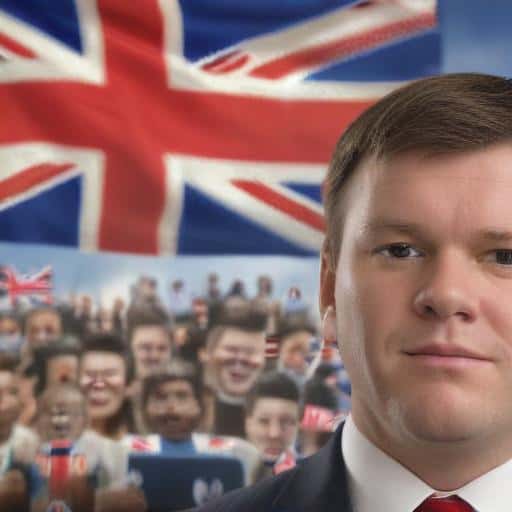
U.S. Vice President JD Vance’s working holiday in Britain drew dismay from some locals on Tuesday, as residents gathered to express their opposition to his politics and what they describe as the turbulence he’s brought to their quiet corner of the English countryside.
Vance has mixed business with leisure during the visit, first staying with foreign secretary David Lammy at the Chevening estate in Kent, where the two held a bilateral meeting after a spot of fishing, before moving on to the hamlet of Dean in Oxfordshire, in the picturesque Cotswolds.
On Tuesday, several dozen people gathered in nearby Charlbury to stage a “Not Welcome Party.” Protesters posed with cake and signs bearing pro-Palestinian slogans and messages such as “Go Home.” A van displaying an unflattering manipulated image of a bald Vance also circulated in Charlbury.
“We want to show our feelings, hopefully some of it will get through to Vance and the American press and to Ukraine, so people know what we stand for,” said Brian Murray, 65, a retired tour guide. “The fact he is in our backyard gives us a great opportunity to have our voices heard.”
Vance is scheduled to meet on Tuesday evening with Robert Jenrick, a source in the opposition Conservative Party said. Jenrick was runner-up in last year’s Conservative leadership contest and is widely regarded as a likely future prime minister if the position becomes available. The Telegraph reported that Vance would also meet Nigel Farage, the leader of the Reform UK party.
Officials noted that Vance has developed a warm friendship with Lammy, with the two bonding over their difficult childhoods and shared Christian faith.
The Cotswolds have long been a magnet for Britain’s elite—former prime minister David Cameron lives in Dean—and are increasingly popular with wealthy Americans. The visit comes amid broader discussions around the role of U.S. leaders on the world stage and the way such visits are received by local communities and international media. The area’s appeal to affluent transatlantic residents is highlighted by mentions that public figures like Ellen DeGeneres have cited the Trump-era election as a reason for relocating to the region.
Context and analysis:
– The visit underscores the ongoing intersection of U.S. political leadership and international audiences, where protests and diplomacy can unfold simultaneously on foreign soil.
– Dean and the surrounding Cotswolds’ profile as upscale, cosmopolitan enclaves adds a layer of social dynamic to political travel, sometimes drawing attention beyond policy questions to local sentiment and planning considerations.
– The involvement of prominent political figures in Britain—either as hosts or as potential meeting partners—reflects the enduring diplomacy between the United States and the United Kingdom, even as U.S. parties navigate global critique.
Summary: JD Vance’s Britain trip combined official discussions with public demonstrations, highlighting both the reach of American politics abroad and the local pushback that comes with high-profile visits. The engagements with British lawmakers and potential talks with Reform UK’s Nigel Farage signal the continuing interest in cross-Atlantic relations, while the protests illustrate the enthusiasm and friction that can accompany such international exchanges.
Positive angle:
– Despite protests, the trip offers a platform for dialogue between U.S. and UK lawmakers and for showcasing transatlantic friendships, including Vance’s stated rapport with Lammy, which can help frame ongoing cooperation on shared concerns.
If you’d like, I can add a brief section with reader-facing questions to spark comments, or tailor the piece to emphasize diplomacy, local impact, or political controversy depending on your editorial focus.
Leave a comment