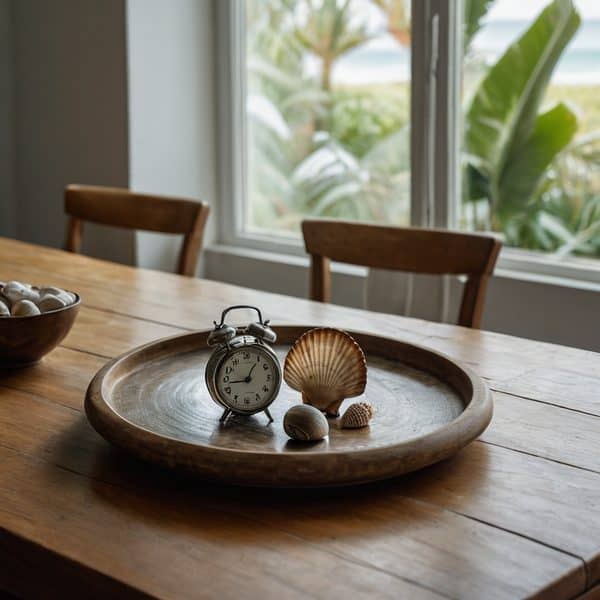
During a recent family talanoa in Fiji, a simple question to his eldest son revealed a quietly powerful tool for managing pressure: compartmentalising. When asked how he keeps calm “when things start going pear-shaped,” the young man’s immediate answer — “I’ve learned to compartmentalise” — cut through the emotional clutter and set the tone for a practical conversation about emotional resilience.
Compartmentalising, as the son explained at the table, is not denial. It is an intentional act of mentally placing a troubling situation into a separate space so emotions do not spill into every part of life. “If it wasn’t something I could control, I chose not to let it derail or damage me,” he told his family. He described the process as mentally parking the problem and returning to it later when he is calmer and better able to respond — a short sentence he uses to create psychological distance: “I’m not ignoring this. I’m parking it for now. I’ll come back to it when I’m calmer.”
The practice can be visualised as a house with many rooms: one room holds worries, grief or anger; other rooms hold work, family and moments of rest. Closing the door to the “grief room” temporarily allows a person to function in the other spaces without being overwhelmed. In Fiji today, where many households face compounding pressures — rising costs, family obligations and the daily grind of uncertainty — that ability to stay present and functional matters more than ever.
But compartmentalising sits on a knife-edge between healthy self-regulation and unhealthy avoidance. Healthy compartmentalising is deliberate and time-limited: it acknowledges the problem and sets it aside so it can be addressed later with clearer thinking. Unhealthy compartmentalising becomes suppression when the door is locked and the key thrown away; emotions and unresolved issues can build until they explode in anger, anxiety or other crises.
That distinction is increasingly relevant amid national conversations about mental health. Community leaders and service providers have urged greater attention to emotional wellbeing in recent years, highlighting that men and young people in particular often struggle to seek help. In that context, practical techniques that preserve day-to-day functioning while leaving space for later reflection can be a valuable part of a broader approach to resilience — provided they are coupled with honest assessment and support when issues persist.
Practically, the talanoa offered a few simple steps for practising healthy compartmentalisation: name the feeling, decide consciously to pause engagement, label the pause (“I’m parking this”), and schedule a time to revisit the issue. The goal is to pause reactive behaviour, not to bury problems indefinitely. If a parked concern continues to affect sleep, relationships or daily performance, that’s a signal to unbox it with help — from family, trusted friends or professional services.
The quiet exchange at that dining table ended with more than a parental sense of pride. It also reinforced an everyday lesson about emotional craftsmanship: sometimes resilience is not about never feeling overwhelmed, but about learning how to steward emotions so they do not wreck the rest of life while waiting for the right moment to be addressed. In communities across Fiji, that kind of disciplined calm can make a tangible difference in how families navigate the pressures of modern life.
Leave a comment