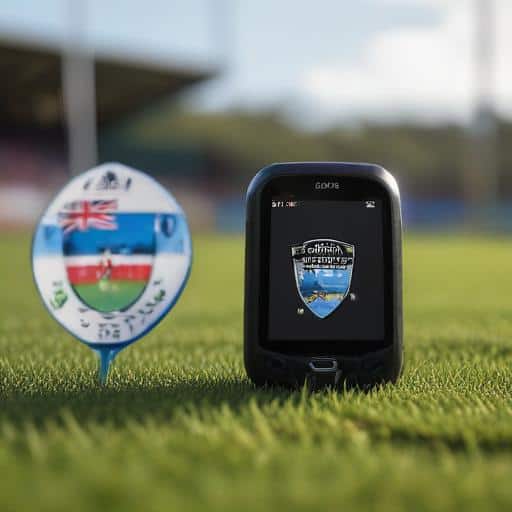
GPS tracking is shaping the future of Fiji rugby, with performance data now playing a central role in deciding who trains hardest, how sessions are run, and which players earn selection calls.
At the FRU Symposium, coaches and administrators were told that GPS analytics are an essential tool for monitoring intensity, managing workloads, and ensuring players push themselves to their limits in a highly competitive environment. Drua’s athletic performance coach, Eroni Sotutu, described the technology as more than a training aid—it’s a framework that holds athletes accountable.
“It adds a layer of accountability that players can’t hide from because we’ve got the ability to quantify their work outputs now. So guys who are not meeting their targets, they have to do extras because it’s a tough competition and we can’t afford to slack off,” Sotutu said.
Beyond measuring effort, the data enables coaches to tailor training sessions, review performances in detail, and make more informed selection decisions. Sotutu noted a key challenge: while provincial and grassroots teams may not yet have access to GPS devices, the goal is to share these tools and the know-how to strengthen pathways across all levels of Fijian rugby.
Broader context and value for Fiji rugby
– The push toward analytics aligns with other FRU initiatives to modernize coaching and development. Earlier reports highlighted FRU’s investment in technology to refine game analysis, including Hudl cameras installed at venues to capture comprehensive footage and enable live tagging and advanced analytics. This momentum signals a wider move to data-driven decision making across the sport.
– The symposium’s emphasis on pathways reinforces Fiji’s ongoing work to connect grassroots rugby with elite performance. By combining evidence-based training with structured development routes—from schools to clubs to national teams—the FRU aims to build a sustainable pipeline of talent.
– Educational and pathway-focused efforts, including discussions around tertiary opportunities for players balancing studies with rugby, complement the data-driven approach. The intent is to keep talented players engaged with the sport while pursuing higher education, ensuring long-term participation and success.
Additional value and future outlook
– If implemented effectively, GPS and related analytics can help standardize coaching across Fiji, reducing gaps between well-resourced programs and those with fewer resources.
– Practical steps for broader rollout include training for coaches on interpreting GPS outputs, establishing cost-sharing models for equipment, and ensuring data privacy and ethical use of performance data.
– The overall trajectory is hopeful: a data-informed, pathway-centric system could elevate performance at every level, from community clubs to national teams, while reinforcing Fiji’s rugby culture and leadership on the world stage.
Summary
GPS tracking is being positioned as a core element of Fiji rugby’s modernization, offering measurable accountability, personalized training, and smarter selection. When paired with ongoing investments in analytics, education, and development pathways, this approach promises a stronger, more inclusive framework for Fiji’s rugby future.
Positive takeaway
Embracing data-driven training and clear pathways gives players at all levels a fairer shot to reach their potential, while helping Fiji maintain a resilient, homegrown talent pool for the years ahead.
Leave a comment