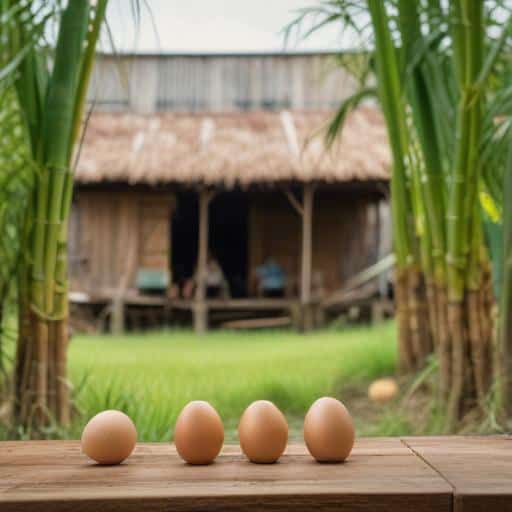
Ashok Kumar has made a significant lifestyle change, trading in the labor-intensive days in sugarcane fields for the dynamic world of poultry farming, and he’s thriving in his new venture. At 50 years old, Kumar is the owner of Avish Poultry Farm in Labasa, which began with a modest investment of just 270 chicks. Today, he proudly manages a flock of 2,700 laying hens and 500 chicks, with ambitious plans for expansion.
Kumar envisions increasing his flock to 5,000 to 6,000 birds in the next five years, aiming to produce around 120 to 130 trays of eggs daily for his loyal customers. His journey from a sugarcane farmer with limited knowledge to a self-taught agribusiness success highlights his resilience and determination. With support from the National Development Programme and Fiji Development Bank, he successfully transitioned to poultry farming despite his initial lack of experience in agribusiness.
He highlights the importance of exploring alternative income streams and believes poultry farming can serve as a secure source of livelihood for fellow farmers. By sharing his story, Kumar is motivating others to consider agriculture’s diverse opportunities and adapt to changing market demands.
The spirit of innovation and resilience within the agriculture sector in Fiji is echoed in the stories of other farmers, such as Asaeli Uluimoala, who shifted from the hospitality industry to farming, and Krishneel Deo, who invested in a poultry mill that aids local farmers. These narratives underscore a growing movement toward agricultural self-sufficiency and economic diversification in Fiji, fostering hope for a vibrant agricultural future.
The accomplishments of Kumar and his peers not only illustrate the potential of agriculture as a viable source of income but also encourage a culturally rich agrarian economy amidst the challenges posed by modern demands. Their experiences serve as an inspiration, proving that with passion, determination, and support, farmers can adapt and thrive, paving the way for sustainable practices and community resilience in the region.
Leave a comment