
France’s announcement that it will expand its nuclear arsenal has been matched by a visible naval presence in the region this week, as Paris seeks to signal both deterrence and a continued role in Pacific security amid growing geopolitical tensions. President Emmanuel Macron framed the policy shift bluntly, saying “to be free, we have to be feared,” as the country moves to beef up its defence posture while its navy makes port calls in Australia.
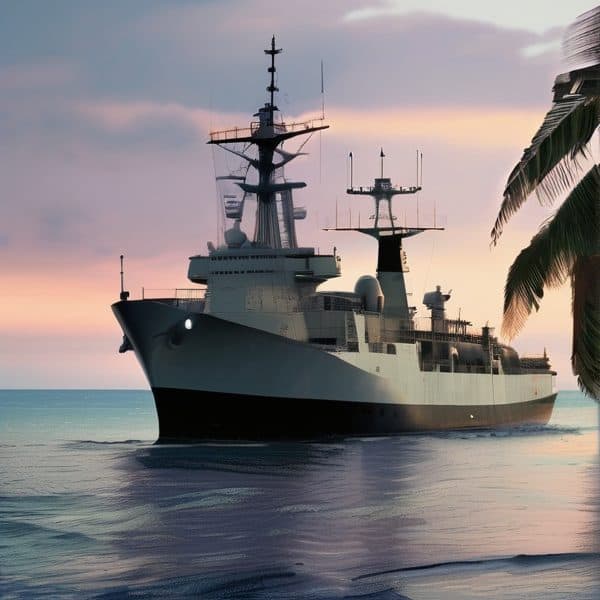
In Hobart earlier this week the French icebreaker L’Astrolabe arrived after completing its final Antarctic rotation of the season, accompanied by the patrol ship Benebig. The Benebig’s visit coincides with commemorations marking 400 years since the founding of the French navy in 1626, part ceremonial, part strategic: the ships are undertaking outreach and scientific events even as they underscore France’s operational presence in the Indo‑Pacific. France’s ambassador to Australia, Pierre‑Andre Imbert, told AAP in Canberra the navy’s “main mission” is to protect French interests and the rights and sovereignty of partners across the region.
Imbert tied the port visits directly to concerns about maritime freedom, saying the French navy plays an important role in safeguarding sea lanes at a time of rising regional tension—an anxiety amplified by last September’s Chinese intercontinental ballistic missile test. China’s missile travelled nearly 12,000 kilometres before landing roughly 700 kilometres from the Marquesas Islands in French Polynesia, a development that Paris and other governments say has heightened worries about increasing militarisation in the Pacific.
Beyond symbolic deterrence, Imbert highlighted practical cooperation with regional partners, including Australia, to counter transnational threats. He pointed to Franco‑Australian operations that have targeted illegal, unreported and unregulated fishing—an activity that poses “a major threat to the region’s economies”—and efforts to clamp down on drug trafficking. The ambassador described joint operations against transnational crime as a “tremendous success,” reflecting ongoing security ties that reach into the maritime and law‑enforcement spheres.
The Hobart visits were not solely about defence. France also used the opportunity to celebrate scientific and historical links with the region. Imbert said archives from the late 18th‑century d’Entrecasteaux expedition, which documented encounters in Tasmania and across Pacific island nations, have been digitised and handed to the National Archives of Australia. The material—he described as “exceptional” for its testimonies of First Nations people and records of cultural exchange—is being translated into English to broaden access.
For Pacific island states such as Fiji, the developments underscore shifting strategic dynamics: France is reinforcing both hard and soft power in the Indo‑Pacific, citing the protection of overseas territories such as French Polynesia and cooperation against illicit maritime activities. The convergence of Macron’s nuclear announcement, the memory of the Chinese missile test, and the visible deployments of French vessels in regional ports together mark the latest phase in a contest of influence that Pacific governments must navigate amid competing interests from major powers.