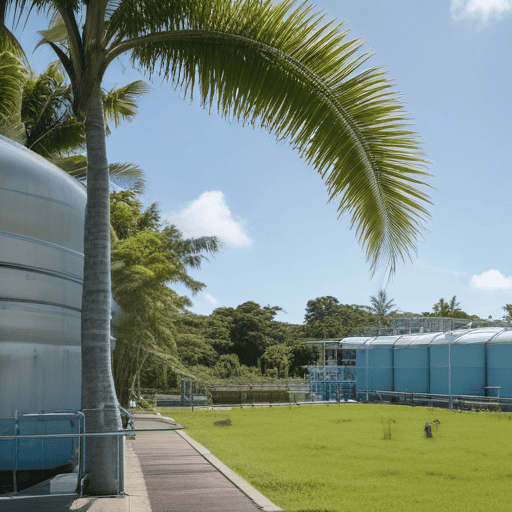
The Water Authority of Fiji (WAF) has expressed optimism regarding upcoming enhancements to the Tamavua Water Treatment Plant, which are anticipated to significantly ameliorate local water supply issues. Acting Chief Executive Seru Soderberg emphasized the critical need for these upgrades, particularly in response to the recent increases in turbidity levels that have hampered production capabilities.
The ongoing high turbidity levels at the plant have led to reduced production capacity, consequently affecting reservoir levels and the water supply to numerous communities. Soderberg outlined a two-phase plan to address this challenge, which includes the Sawani to Colo-i-Suva project currently pending approval. This initiative aims to redesign the upper Tamavua system under the Viria Water Supply Feed Zone and upgrade the water treatment capacity at the Tamavua facility, a project supported by the Fijian government.
Currently, the Tamavua plant, designed to process 60 million liters daily, is working under strain, managing an output of approximately 75 million liters. According to Soderberg, operating at around 115 percent capacity means that any fluctuations in raw water quality can severely impact the plant’s efficiency in treating water, which is crucial for meeting national drinking water quality standards.
This upgrade is particularly important as local residents have voiced their frustrations over prolonged water disruptions, even during periods of substantial rainfall. Many have highlighted disparities between heavy rainfall and water availability, with complaints often directed towards WAF’s explanations that cite low water levels or contamination.
However, there is a sense of hope on the horizon. Infrastructure projects, like the $40 million Viria Water Treatment Plant and the Princes Road Water Infrastructure Project, aim to drastically improve supply reliability in underserved regions, particularly for communities in elevated areas such as Tamavua and Tacirua. These developments promise to enhance water resilience during high turbidity events, which have increasingly burdened local residents.
As these plans progress, the combined efforts of local authorities and infrastructure improvements are set to deliver a more reliable water supply to the areas in need, instilling optimism in communities that have long faced supply challenges. This proactive approach not only seeks to resolve immediate issues but also lays a foundation for sustainable water management in the future.
Leave a comment