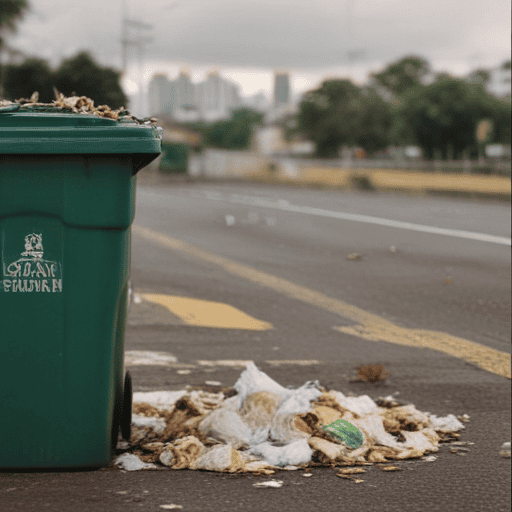
SUVA City, the vibrant capital of Fiji, faces an urgent challenge with rising litter levels that are threatening both its beauty and environmental health. A walk along Nasese reveals a troubling scene of discarded food packaging, plastic bottles, and other waste scattered across pathways and waterfronts, which not only detracts from the city’s charm but also poses risks to marine life, soil quality, and air purity.
Despite the availability of rubbish bins, many residents and visitors continue to neglect waste disposal responsibilities, indicating a pervasive issue surrounding consumer behavior. The prevalence of single-use plastics and disposable packaging exacerbates the littering problem, pointing to a need for systemic changes in both corporate practices and individual accountability.
The role of the Consumer Council of Fiji and the Ministry of Environment has become increasingly important as they collaborate on sustainable solutions to curb littering. Their initiatives include public awareness campaigns, regulatory enforcement, and community-driven efforts aimed at instilling responsible consumer behavior and advocating for sustainable production practices.
The article echoes broader concerns raised by various community leaders, including Jone Marika and former Speaker Pita Nacuva, who have highlighted a worrying trend of indifference towards waste disposal. Marika noted that careless littering by drivers and passengers contributes significantly to public health and environmental degradation, calling for more stringent monitoring and community education.
Education and the cultivation of civic pride are crucial in shifting the mindset towards littering. Many believe societal attitudes must evolve, and personal accountability better foster a clean environment. Examples from Japan, Singapore, and Sweden illustrate that an engaged community can lead to successful waste management practices. These countries have established cultures where individuals not only take ownership of their waste but participate actively in maintaining cleanliness.
Fiji’s reliance on tourism makes addressing this issue critical, as a polluted environment could deter visitors seeking the pristine beauty of its beaches. By adopting proactive strategies and fostering community responsibility, there is hope for Fiji to combat litter effectively. Individual actions, from holding onto rubbish until a bin is found to participating in clean-ups, can cumulatively lead to significant positive change.
As Fijians come together to embrace sustainable practices, they can ensure that their natural treasures are preserved for future generations, reinforcing the message that keeping Fiji clean is indeed a collective responsibility. The path to a cleaner, greener Fiji starts with awareness, accountability, and action from everyone.
Leave a comment