In the early days of Christianity in Fiji, a significant effort was made to establish a Catholic mission in the Lau province beginning in 1844. This seven-year undertaking, led by French priests Father Breheret, Father Roulleaux, and Brother Annet under the guidance of Bishop Bataillon, who arrived in Fiji in 1842, faced numerous challenges and ultimately proved less successful than hoped.
The mission encountered various difficulties, and when Bishop Bataillon returned to Fiji in 1951, he found the mission in poor condition. This prompted the decision to relocate pastoral efforts to more promising areas, such as Taveuni, Rewa, Verata, Solevu in Bua, and Ovalau, which was better positioned for growth.
During the same period, Father Breheret and his companion faced a harrowing journey as their vessel capsized near Levuka. With the aid of natural currents, they managed to swim to shore at Levuka village, where they subsequently found support and contributed to building the Levuka Vakaviti’s church, which may be the oldest standing village church in Fiji.
As noted by Kelevi Toka, a local historian, Levuka was known as the “birthplace of the nation.” It was a bustling center during the 19th century, where various chiefs and notable figures met for discussions, religious services, and trade. The priests who accompanied the settlers were multi-skilled, contributing to the crafting of churches using local materials such as limestone sourced from the coral reefs.
The first mass on Levuka soil was celebrated by Father Breheret in 1851, expediting the establishment of a community rooted in faith. The town served as a pivotal meeting point for both local and European settlers. Over the years, Levuka saw the establishment of schools and churches such as the Wesleyan mission station and the first school in Fiji, which emerged in 1852.
These historical landmarks underscore Levuka’s religious evolution and its critical role in the cultural landscape of Fiji. With its rich history intertwined with the development of Christianity, Levuka remains a focal point where past and present converge.
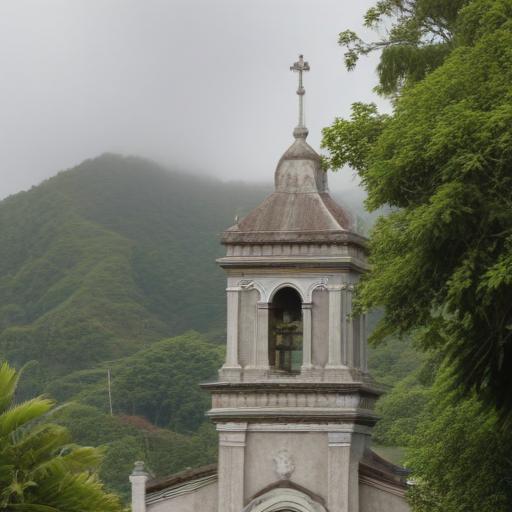
Today, the 155-year-old Levuka Vakaviti church stands as a testament to the colonial architectural heritage and the transformative period of Fiji’s history. The locals endeavor to honor this legacy while navigating the challenge of modernizing while preserving historical structures.
The ongoing preservation efforts reflect a commitment to maintaining Levuka’s unique historical identity as a UNESCO World Heritage Site. This not only honors the past but also paves the way for future generations to appreciate and engage with the rich cultural tapestry that defines Fiji. As Levuka evolves, it retains a significant narrative of resilience and faith that continues to resonate with both residents and visitors alike.
Leave a comment