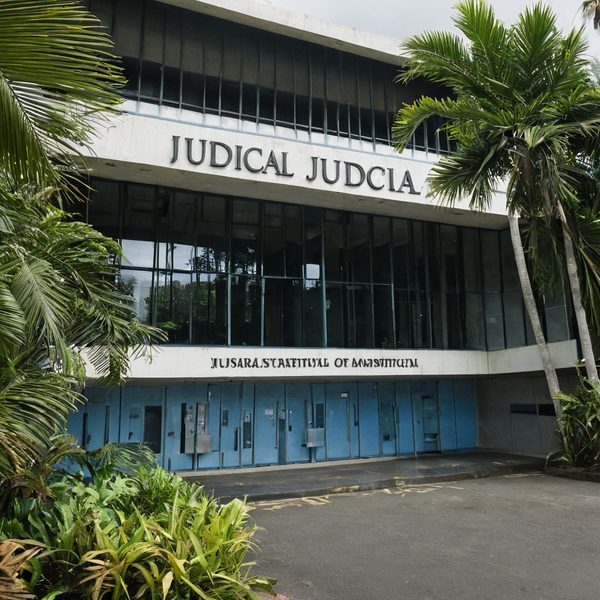
The Judicial Service Commission (JSC) has moved to establish a formal, periodic performance review for judges as part of a broader effort to tackle non-performance and complacency on the bench, Appellate Court president Isikeli Mataitoga said on Thursday.
“We are now looking seriously at introducing a periodic review mechanism,” Justice Mataitoga told reporters, acknowledging longstanding obstacles to holding judicial officers to account once they are appointed. Under the present system, he said, judges often serve long tenures with limited oversight, making discipline difficult to pursue. “This is because of the very difficulty of disciplining,” he said.
The reviews, Mataitoga said, would measure more than simply the number of case disclosures a judge produces. The proposed framework would also assess conduct outside courtroom duties, with the aim of “bring[ing] back the standards” expected of judicial officers. “Not only because of how many case disclosures you’re having. But other areas, including your performance in public when you are not a judge,” he said.
A central concern for the JSC is designing clear, objective criteria so the review process is fair and legally robust. “Through periodic performance review, we have to identify the criteria we will use so that we are not subject to judicial review,” Mataitoga explained, signalling awareness that poorly framed evaluation measures could themselves be challenged in court.
Justice Mataitoga was unequivocal about consequences for judges judged to be underperforming. “It’s not going to happen. You get a bad review, you’re going home,” he said, adding that a poor appraisal would be treated as a disciplinary issue handled under the appropriate provisions. The implication is that the JSC intends the reviews to feed directly into existing disciplinary pathways to remove judges whose performance falls below the commission’s standards.
The JSC’s announcement marks the latest development in internal calls for improved judicial accountability. While judicial independence is a cornerstone of the legal system, Mataitoga’s comments underscore the commission’s view that independence must be balanced with mechanisms that ensure judges remain effective and maintain public confidence. The JSC has not yet released a timeline for implementing the reviews or published the draft criteria, leaving questions about how frequently judges will be evaluated and which specific performance indicators will be used.
For now, the initiative remains at the planning stage, with the commission reportedly working to frame criteria that will withstand legal scrutiny. The proposed change could represent a significant shift in judicial oversight if implemented, moving Fiji’s system toward routine, structured appraisal of judicial performance where such a mechanism was previously absent.
Leave a comment