
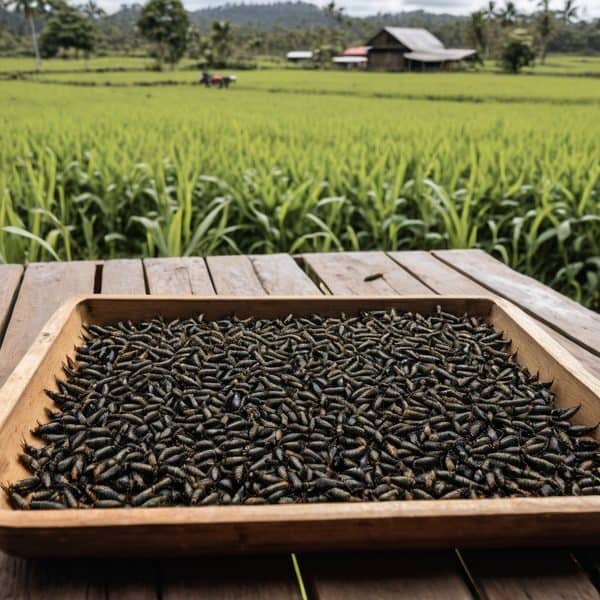
Fiji’s Minister for Agriculture, Waterways and Sugar Industry Tomasi Tunabuna told Parliament on Tuesday that trials using black soldier fly (BSF) larvae as a low‑cost protein source for livestock are showing strong promise, but extended vetting processes could delay when farmers begin to benefit from commercial production. The update — the latest development in a government-backed effort to develop insect‑based feed — confirmed that the project is now in a second phase focused on scaling up production, even as regulators and partners continue to assess next steps.
“The mature larvae are a valuable source of protein, highly sought after by livestock farmers for animal feed,” Tunabuna said, adding that the technology supports a “circular economy” by converting organic waste into usable products. According to the minister, initial trials have demonstrated multiple benefits including measurable waste reduction, environmental gains and the production of organic fertiliser from by‑products of the larvae production process.
The initiative is being implemented in partnership with the Fiji National University and supported by international agencies, Tunabuna said. Phase two work is concentrating on moving from small trial units toward larger, more commercially viable production systems — a shift that will test logistics, supply chains and quality control at scale. The minister also highlighted Fiji’s natural advantages for the approach: abundant organic waste streams and tropical conditions that are conducive to BSF rearing.
If fully adopted, the government expects the insect‑based feed to lower costs for livestock producers and reduce dependence on imported feed ingredients such as fishmeal and soy, Tunabuna told Parliament. That reduction in imported inputs could have knock‑on effects for food security and farm productivity, he added, as cheaper, locally produced protein feed would help bring down livestock production costs.
Tunabuna warned, however, that the commercial rollout timeline remains uncertain. “The extended vetting processes may delay the implementation and completion of the project, thereby impacting the timely availability of BSF for commercial use by farmers,” he said, without naming specific agencies or timeframes. The reference to vetting reflects the broader need to satisfy safety, animal‑feed and possibly biosecurity standards before a new feed ingredient is widely approved for commercial use.
The minister stressed that ongoing research, farmer training and stakeholder engagement will be critical for successful adoption across Fiji. He framed the project as not only a technological innovation but also a capacity‑building exercise that will require extension services, standards development and market acceptance to ensure producers and consumers benefit.
Tunabuna’s remarks provide the most detailed public update so far on the government’s insect‑feed programme. While trials have moved into a scaling phase, officials and industry observers will be watching how quickly regulatory checks are completed and whether pilot production can be matched to farmer demand. For now, the project remains a promising locally driven route to cutting waste and import bills, but one whose commercial impact will depend on the outcome of current vetting and implementation work.