Nearly half of Fiji’s treated water was lost before it reached consumers in 2025, the Fiji Bureau of Statistics (FBoS) said on Tuesday, in the bureau’s first Experimental Environmental Account for Water covering that year. The report found 49.3 percent of water extracted by the Water Authority of Fiji (WAF) was lost during distribution, with a further 5.3 percent lost during purification — figures that underscore severe system inefficiencies even as total extraction rose.
Total water extraction in 2025 increased 2.1 percent to 171,595 megalitres, FBoS reported. Of that volume, WAF accounted for 89.9 percent of extraction while households directly extracted the remaining 10.1 percent from sources such as rivers, wells and rainwater. The bureau framed the account as a new framework for tracking production and use across the country’s water systems.
Households were by far the largest users, consuming 80.5 percent of total water use in 2025. Household consumption rose sharply — by 8.5 percent compared with 2024 — while commercial use fell by 8.3 percent and government consumption dropped 1.7 percent. The report cautions, however, that current data does not yet capture alternative water sources used by businesses, meaning commercial consumption may be underreported in the account.
FBoS highlighted continued household reliance on non-piped sources — rivers, groundwater and roof-harvested rainwater — to supplement supply. The bureau said future releases will broaden the experimental account by incorporating business-sourced water and by conducting household and enterprise surveys to improve the quality and completeness of water consumption data.
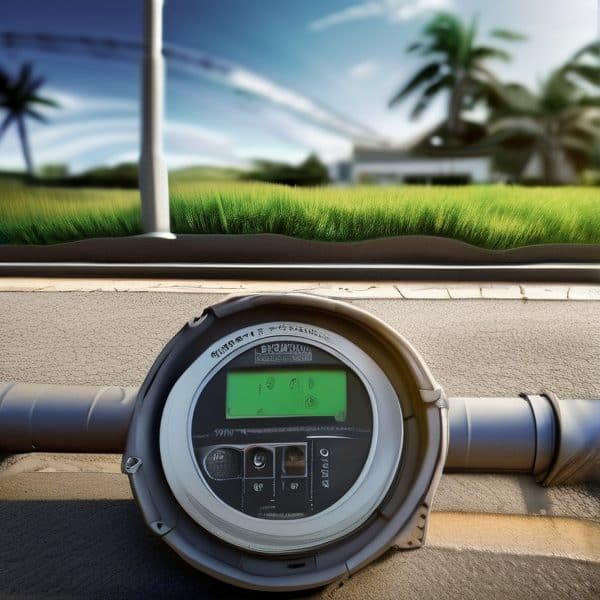
The new FBoS loss estimate dovetails with recent operational moves by WAF to tackle non-revenue water. In August, WAF announced a smart meter rollout aimed at reducing losses, citing a non-revenue water rate around 47 percent. The close alignment between the bureau’s distribution-loss figure and WAF’s earlier estimate highlights the scale of the problem, while differences underline measurement challenges across agencies and the need for standardized data collection.
The findings carry immediate implications for water security and financial sustainability. High levels of loss mean more extraction and treatment are required to meet demand, increasing costs and pressure on water sources. The rise in household consumption, combined with persistent losses in distribution and treatment, raises questions about the resilience of urban networks and the potential benefits of investments in leak detection, meter replacement and network rehabilitation.
FBoS stressed that the experimental account is a starting point for better policymaking, providing a baseline from which to measure trends and the impact of interventions. By expanding data collection to include business alternative sources and rolling out targeted surveys, the bureau aims to refine estimates and inform strategies to reduce losses and manage growing demand more sustainably.
Leave a comment