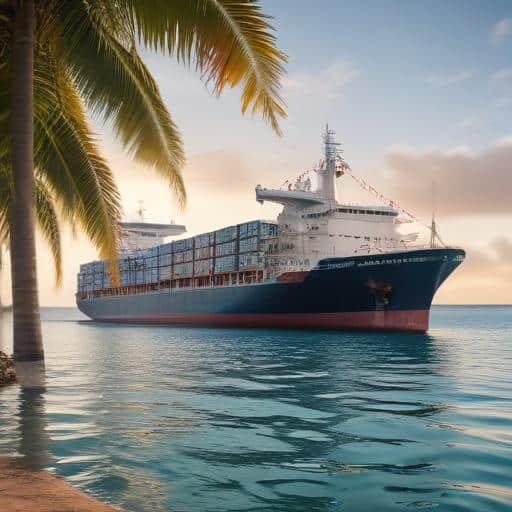
Fiji is poised to face significant economic challenges due to the introduction of a 32% tariff on its exports to the United States, following new reciprocal tariff policies announced by President Donald Trump. This development comes in response to Fiji’s own 63% tariff on American imports, a measure that the Fijian government has imposed to regulate trade dynamics between the two nations.
As emphasized by Deputy Prime Minister and Minister for Trade, Manoa Kamikamica, the U.S. has historically been a vital trading partner for Fiji, accounting for about 10% of the nation’s total trade. Recent data highlights Fiji’s exports to the U.S. totaled nearly F$500 million annually, primarily comprising agricultural products such as bottled water, kava, and fish. However, the new tariff is expected to significantly impact local exporters, who are now grappling with increased export costs.
The Reserve Bank of Fiji (RBF) has already noted that remittances from the U.S., a critical source of funding for many families in Fiji, may also be at risk due to these tariff changes. In its Economic Review, the RBF pointed out that the recently passed “One Big Beautiful Bill Act” includes a 1.0% remittance tax set to take effect in January 2026, which could further exacerbate financial pressures on the island nation’s economy.
Despite the immediate challenges, there exists cautious optimism among economists and government officials. Analysts suggest that Fiji may find opportunities amid these turbulent trade dynamics. As larger economies reconsider their supply chains due to the increased tariffs, Fiji could potentially benefit from lower-priced imports. The resilience of Fiji’s economy, underscored by its strong export sector, particularly bottled water, offers a glimmer of hope for navigating these changes effectively.
Furthermore, the proactive approach taken by the Fijian government, which is actively engaging with U.S. officials to negotiate and better understand the implications of the tariffs, could aid in mitigating some of the adverse impacts on local businesses.
Fiji’s government remains committed to monitoring these developments closely and exploring alternative markets, which could ultimately position the nation for growth and stability, even in the face of evolving global trade conditions.
In summary, while the 32% tariff poses considerable challenges, Fiji’s proactive stance and strong reliance on strategic exports might just pave the way for continued resilience and adaptation in the international market.
Leave a comment