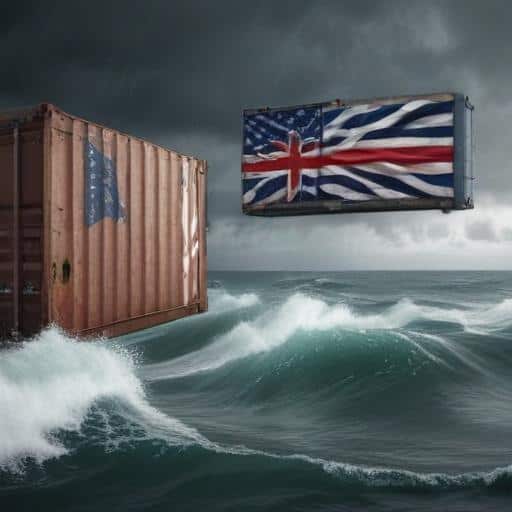
Fiji is bracing for significant implications stemming from a newly imposed 32 percent tariff on its exports to the United States, as part of a reciprocal trade policy introduced by President Donald Trump. This decision has generated concern among Fijian officials, particularly because the U.S. represents approximately 10 percent of Fiji’s overall trade, primarily through exports like bottled water, tuna, and kava.
The Reserve Bank of Fiji (RBF) recently highlighted that this tariff could severely affect remittances from the U.S., which are vital for many Pacific Island nations, including Fiji. In its Economic Review, RBF noted that the “One Big Beautiful Bill Act” includes a 1.0 percent remittance tax starting January 2026, potentially impacting the financial lifelines many families rely on.
Furthermore, statistics indicate that in 2022, Fiji earned about $1.32 billion in personal remittances, with 24 percent derived from the U.S. Between January and June of this year, remittances stood at $629 million. The RBF warned that ongoing U.S. tariffs may disrupt global supply chains, leading to diminished visitor arrivals and trade, which could compound economic difficulties for Fiji.
Additionally, data from the Fiji Bureau of Statistics reflects a declining trend in exports to the U.S. in recent months. For instance, during April, exports fell 4.3 percent to $35.3 million, with the most significant drop occurring in May when values plunged to $31 million, attributed largely to declines in mineral water and fish products.
However, there’s cautious optimism as Fijian officials remain committed to addressing these economic challenges. Deputy Prime Minister Manoa Kamikamica stressed the importance of negotiating with U.S. officials to alleviate the impacts of these tariffs and explore avenues to diversify trade partnerships. Some analysts suggest that restructuring in global supply chains might present new opportunities, potentially allowing Fiji to adapt its strategies and access more competitive pricing for imports.
While uncertainties persist, Fiji’s strong reliance on certain exports, particularly bottled water, may serve as a buffer against the immediate effects of tariff imposition. The government’s proactive stance could enable the nation to navigate this economic landscape, fostering resilience amid evolving international trade dynamics.
Leave a comment