
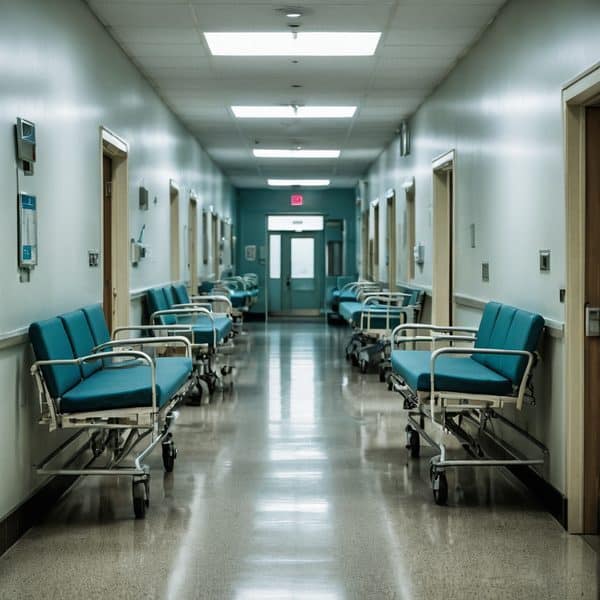
An 82-year-old man says a shortage of beds at public hospitals forced his family to spend nearly $6,000 on private care while his wife’s condition deteriorated — a sequence he blames for delays that ended with her death.
Ram Sewak told this newspaper his wife, whom he had been married to for 55 years, developed breathing problems and was taken to the Colonial War Memorial Hospital (CWMH) emergency. The couple say she was admitted at CWMH, but they became concerned after being given a diagnosis of lung cancer that was later withdrawn and described to them as incorrect by hospital staff. “We were told she had lung cancer, but later they withdrew that and apologised, saying the diagnosis was wrong,” Mr Sewak said.
Uncertain about the diagnosis and care, the family transferred his wife to Oceania Hospital, a private facility. There they paid for a bed and an oxygen cylinder as they waited for a specialist. Mr Sewak said the consultant did not see them for about two-and-a-half hours, during which time charges continued to accrue. When the consultant eventually examined his wife, Mr Sewak said the doctor advised them to return to CWMH the next morning.
The following day CWMH had no beds available, Mr Sewak said, and staff resorted to keeping his wife on a wheelchair because there was nowhere to admit her. “I had no choice but to discharge her and take her home,” he said. He and his family tried again the next day but still could not secure a public hospital bed. They eventually had his wife admitted back to Oceania Hospital, Mr Sewak said, but she died shortly after being placed on oxygen. “But after they put her on oxygen, she closed her eyes and never opened them again. At about five to six on Monday morning, the nurse told me she had stopped breathing,” he recalled.
Mr Sewak said the family’s out-of-pocket expenses approached $6,000, covering private hospital bills and the purchase of an oxygen cylinder. He described the experience as an example of how ordinary families can be pushed into costly private care when public hospital capacity is exhausted, and he urged immediate government action. “This shows the difficulties ordinary families face when public hospital beds are unavailable,” he said, calling on the Minister for Health to urgently address the bed shortage.
The account from Mr Sewak adds a personal dimension to concerns about capacity and access at Fiji’s main public health facilities, but no official response from CWMH, Valelevu Health Centre or the Ministry of Health was provided with this report. Mr Sewak’s call underscores mounting pressure on families who must navigate both stretched public services and expensive private alternatives when urgent care is needed.