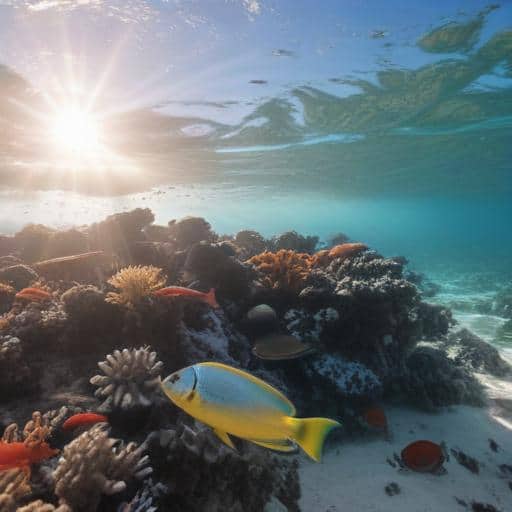
A significant scientific and conservation expedition is currently taking place across Fiji’s vast ocean territory aboard the research vessel Argo. This initiative signifies Fiji’s ongoing dedication to ocean protection and sustainable marine management.
The expedition is being carried out by the National Geographic Pristine Seas team in partnership with Blue Prosperity Fiji, the Ministry of Environment and Climate Change, the Ministry of iTaukei Affairs, and the Ministry of Fisheries and Forests. Its primary goal is to explore and document Fiji’s deep-sea biodiversity, assess ecosystem health, and collect vital data to support the country’s commitment to manage 100% of its ocean space, with 30% designated as fully protected by 2030.
Sivendra Michael, the Permanent Secretary for Environment and Climate Change, stressed the integration of traditional conservation knowledge with modern scientific methods. “Our forefathers valued tabu areas for conservation; we are now merging that with advanced science to safeguard our oceans for the generations to come,” he stated.
The expedition will utilize high-tech equipment, including environmental DNA sampling and autonomous deep-drop cameras, allowing for unprecedented exploration of fragile ecosystems that were previously inaccessible. Notably, for the first time in Fiji, researchers will engage in direct human-operated exploration of these depths.
Educational outreach is also a core feature of the mission. The expedition is collaborating with the Ministry of Education to create an ocean literacy program that aims to introduce marine science into Fijian classrooms and communities.
Kevin Chand, Senior Director of Pacific Ocean Policy for Pristine Seas, highlighted the collaboration that has shaped this expedition, noting the collective efforts since their meeting at the 2024 Our Oceans Conference.
Previous successful missions in the region, including the exploration of Rotuma and Gau, have laid the groundwork for this expedition, fostering optimism for the future of Fiji’s marine biodiversity. During these earlier initiatives, local divers played a crucial role in data collection, showcasing their expertise and cultural connections to the marine environment.
The information and data collected will profoundly benefit Fiji’s marine spatial planning process, crucially informing areas identified for protection based on ecological, cultural, and economic considerations. The research findings will be shared with Fijian researchers, policymakers, and educators, further enriching local efforts and understanding of marine ecosystems.
Permanent Secretary Michael encapsulated the vision behind this initiative: “Ocean protection is not just an environmental concern; it is an investment in the well-being and prosperity of the Fijian people,” emphasizing its role in supporting fisheries, tourism, and securing a sustainable future for upcoming generations.
These efforts reflect a hopeful outlook for Fiji’s ocean conservation, demonstrating a proactive approach to safeguarding marine habitats while enhancing community involvement and scientific inquiry for lasting change.
Leave a comment