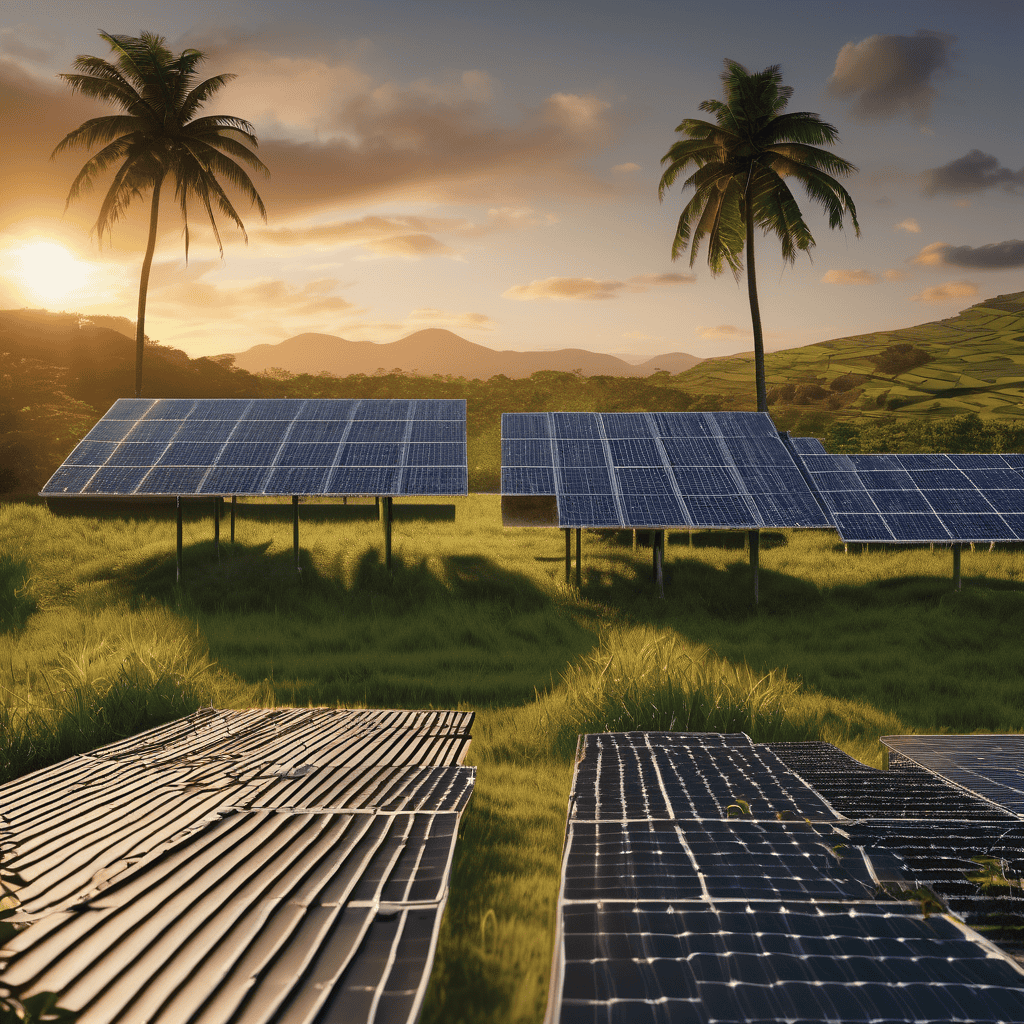
The Fiji Commerce and Employers Federation (FCEF) has raised serious concerns regarding what it describes as a “strategic failure” by Energy Fiji Ltd (EFL) to incorporate solar photovoltaic generation into its energy mix, in light of significant declines in global solar costs. In its recent 21-page submission to the Fijian Competition and Consumer Commission (FCCC), FCEF contended that any increase in electricity tariffs would unfairly shift the burden of EFL’s shortcomings onto consumers who played no part in the decision-making processes that led to this situation.
FCEF highlighted that over the last decade, the costs associated with utility-scale solar photovoltaic systems have plummeted by 85-90%. The International Renewable Energy Agency (IRENA) reported a dramatic decrease in the global weighted-average levelised cost of electricity (LCOE) from utility-scale solar, falling from approximately $0.38 per kilowatt-hour in 2010 to an estimated $0.05 per kilowatt-hour by 2022, with projections indicating further reductions to around $0.04 per kilowatt-hour by 2024.
Despite Fiji’s wealth of solar resources, EFL’s data on energy generation reveals minimal deployment of solar energy. The contribution of solar and wind generation fell sharply from 3.0 GWh (0.30%) in 2019 to a mere 0.8 GWh (0.07%) by 2024. During the same period, diesel continued to dominate the energy landscape, accounting for over 500 GWh annually.
FCEF strongly criticized EFL’s lack of action, claiming that the agency has not embraced technological advancements but rather abandoned them. The federation argued that had EFL actively implemented solar energy solutions between 2015 and 2016, when solar costs became competitive, it could have leveraged the benefits of falling costs while decreasing reliance on diesel.
The analysis from FCEF suggests that beginning aggressive solar deployment in 2015 could have yielded a penetration rate of 20-30% by 2020, akin to Hawaii’s progress, significantly cutting down on diesel generation costs during the costly energy crisis from 2022 to 2024. Data suggests that in the context of Pacific Island nations, solar lifecycle costs can be 30-50% lower than those of diesel, especially when considering fuel transportation costs and the inherent volatility in prices. Cumulative fuel costs avoided through earlier solar deployment could have improved EFL’s financial standing and lessened financial burdens on consumers.
FCEF’s submission draws comparisons with other island nations like Hawaii, Barbados, Seychelles, and Maldives, which managed to achieve 20-40% renewable energy penetration while Fiji saw almost no growth in solar energy contribution.
FCCC CEO Senikavika Jiuta stated that consultations aim to gather feedback from all stakeholders, mentioning that the session with FCEF was part of a comprehensive process to include various viewpoints in the final assessment.
In light of this pressing critique and the potential for a more sustainable energy future, FCEF is urging the FCCC to reconsider its December 19, 2025 determination and to initiate a comprehensive reassessment of EFL’s energy strategy, which could lead to a more cost-effective and environmentally friendly energy landscape for Fiji.
Leave a comment